
Note:
This R. H. Blyth webpage was first prepared and distributed online in 2003.
Internet webpages come and disappear with unexpected irregularity.
Therefore, some of the links
cited below are probably no longer valid.
Chronology
1898 Born on December 3, 1898, in Essex, England. He was the only child of Horace Blyth, a railway clerk, and Herrietta Williams Blyth, housewife. His family was poor.
1914 Greatly influenced by the writings of Matthew Arnold on self-development and excellence.
1915 Graduated from County High School for Boys, Ilford, England. Blyth was a strong, healthy and energetic young man.
1916 Imprisoned in Wormwood Scrubs because he was a
conscientious objector to World
War I, and a pacifist.
1923 Graduated from London University, with honors, in English. Blyth learned
to play the
organ and flute, began making musical instruments, and loved the music by J.S. Bach.
He was
self-taught in numerous European languages. He adopted a vegetarian lifestyle which
he
maintained throughout his life.
1924 Graduated from London Day Training College with a teaching certificate. Married Annie Bercovitch. Taught for awhile in India.
1925 Assistant Professor of English at Keijo University in Seoul, Korea. Began learning Japanese and Chinese.
1926 Began his study of Zen under Kayama Taizi Roshi of Myoshinji Betsuin in Korea.
1927 Strongly influenced by the Zen works of Daisetz Suzuki. Immersed himself in Japanese culture, art, films, and lifestyle.
1933 Adopted a Korean boy. This son later became a teacher, and was executed shortly after the Korean War.
1935 Divorced from Annie Bercovitch.
1937 Married Tomiko Blyth. They had two daughters: Nana and Harumi.
1939 Became a teacher of English at the Fourth High School in Kanazawa, Japan.
1941-1945 Interned as an enemy alien in Kobe, Japan. His influential friends included: D.T. Suzuki, Nosei Abe, Katsunoshin Yamanashi. He wanted to take Japanese nationality but his request was denied. His home and extensive library were destroyed in a bombing raid during the war.
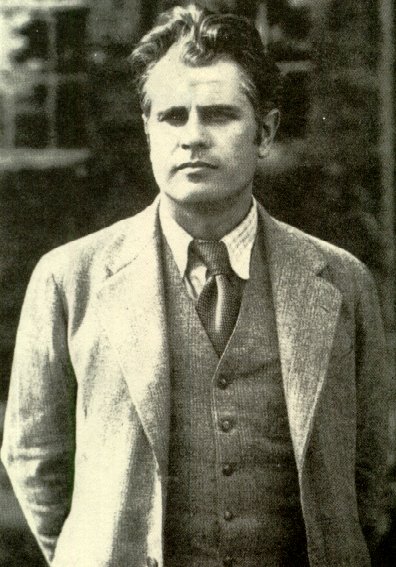
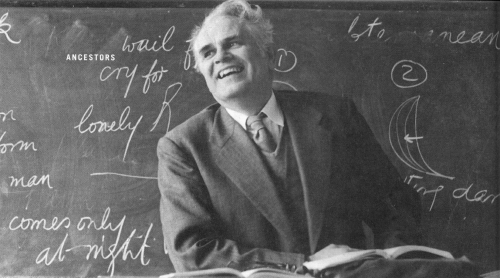
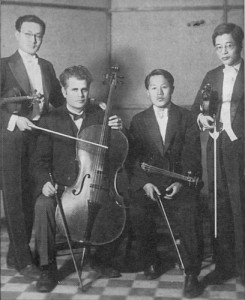
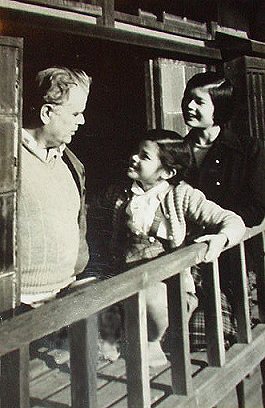
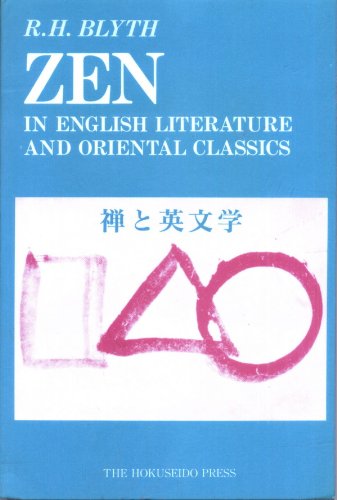
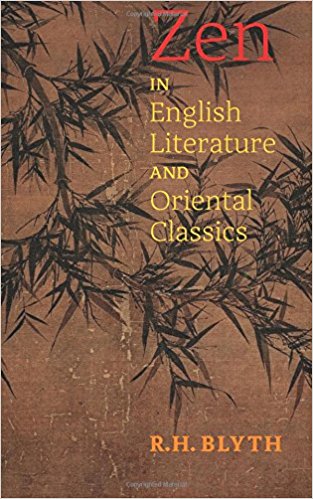
1942 Zen in English Literature and Oriental Classics published by The Hokuseido Press, Tokyo.
1944 Introduced Robert Aitken to Zen Buddhism during their wartime internment at the Rinkangaku Reform School, in Futatabi Park above Kobe, Japan. Also interned at Futatabi Park were Max Brodofsky and Roy Henning. Despite the wartime rigours, the chief guard, Mr. Higasa, treated the internees with respect and kindness. For more information about this period, discuss the matter with Mark S. Schwartz.
1946 Blyth and Harold G. Henderson worked on numerous high level projects in the post-war transition to peace between the Americans and Japanese. Blyth was a liaison with the Emperor's household, and Henderson was on the Occupation Forces Headquarters staff, under the direction of General MacArthur. Blyth and Henderson worked together on Emperor Showa's "Human-Being Declaration" - a public proclamation that the Emperor of Japan was a human being and not a God.
1946 Blyth became a Professor of English at Gakushuin University (Peers' School). Blyth was one of the English language tutors of the Crown Prince, Akihito, who later became the Emperor of Japan.
1949-1952 Haiku (4 Volumes), and Senryu were published by Hoksueido Press and financed by the Prime Minister, Shigero Yoshida. The book is dedicated to Sakuo Hashimoto and Naoto Ichimada.
1954 Awarded a Doctorate in Literature from Tokyo University.
1956 Awarded the Zuihosho (Order of Merit) Fourth Grade by the Japanese government.
1959 Japanese Life and Character in Senryu, and Oriental Humor are published.
1960 Zen and Zen Classics volumes begin to be published.
1961 Edo Satirical Verse Anthology published..
1964 Died on October 28th of a brain tumor and complications from
pneumonia. He died in the
Seiroka Hospital in Tokyo. He was buried in the cemetery of the Shokozan Tokeiji Soji Zenji
Temple in Kamakura, Japan. His tombstone is
next to that of
D. T. Suzuki.
I leave my heart
to the sasanqua flower
on the day of
this journey.
- R. H. Blyth's death poem
camellia petals
fall on Blyth's grave
silent Tokeiji
- Carmen Sterba, Kamakura
Biographical References
Britain and Japan: Biographical Portraits. By Adrian
Pinnington. Folkestone, Japan Library.
Includes a bibliography.
A Haiku Path. Excellent information about the history of
haiku in English.
The Genius of Haiku: Readings from R. H. Blyth on Poetry, Life, &
Zen. With an introduction by
James Kirkup; which includes an informative short biography of Blyth (pp. 3-11).
The Life of R. H. Blyth. By Ikuyo Yoshimura.
Japan: Dohosha Shupan, 1996.
Original Dwelling Place. By Robert Aitken.
Washington, D.C., Counterpoint, 1996. "Remembering
Blyth Sensei," pages: 23-26.
Zen to Haiku: The Life of R. H. Blyth. By Yoshimura Ikuyo.
In Japanese. Tokyo, Dohosha
Suppan, 1996. 222 pages. LC: 98458746. This title is in Japanese:
R. H. Buraisu no Shogai:
Zen to Haiku o Aishite.
I Welcome Your Comments, Ideas,
Contributions, and Suggestions
"A haiku is the expression of a temporary enlightenment, in which we see into the life of things."
"A haiku is not a poem, it is not
literature; it is a hand beckoning, a door half-opened, a mirror wiped clean. It is a way of returning to nature, to our moon nature, our cherry blossom nature, our falling leaf nature, in short, to our Buddha nature. It is a way in which the cold winter rain, the swallows of evening, even the very day in its hotness, and the length of the night, become truly alive, share in our humanity, speak their own silent and expressive language."
- Haiku, Volume One, p. 243.
"Thus we see that the all important thing is not killing or giving life, drinking or not drinking, living in the town or the country, being unlucky or lucky, winning or losing. It is how we win, how we lose, how we live or die, finally, how we choose."
"It is not merely the brevity by which
the haiku isolates a particular group of phenomena from all the rest; nor its suggestiveness, through which it reveals a whole world of experience. It is not only in its remarkable use of the season word, by which it gives us a feeling of a quarter of the year; nor its faint all-pervading humour. Its peculiar quality is its self-effacing, self-annihilative nature, by which it enables
us, more than any other form of literature, to grasp the thing-in-itself."
- Haiku, Volume Four, p. 980.
- Refer to Richard Gilbert's article, From 5-7-5 to 8-8-8
"Art is frozen Zen."
- Zen in English Literature and Oriental Classics, p.3
"The importance and unimportance of the self cannot be exaggerated."
"If all men lead mechanical, unpoetical lives, this is the real nihilism, the real undoing of the world."
"These are some of the characteristics
of the state of mind which the creation and appreciation of haiku demand: Selflessness, Loneliness, Grateful Acceptance, Wordlessness, Non-intellectuality, Contradictoriness, Humor, Freedom, Non-morality, Simplicity, Materiality, Love, and Courage."
- Haiku, Volume One, p. 154
"The love of nature is religion, and
that religion is poetry; these three things are one thing. This is the unspoken creed of haiku poets."
- History of Haiku, Vol. One, Introduction, 8.5
"The object of our lives is to look
at, listen to, touch, taste things.
Without them, - these sticks, stones, feathers, shells, -
there is no Deity."
- R. H. Blyth, Zen in English Literature and Oriental Classics, p. 144.
"The sun shines, snow falls, mountains
rise and valleys sink, night deepens and pales into day, but it is only very seldom that we attend to such things ... When we are grasping the inexpressible meaning of these things, this is life, this is living. To do this twenty-four hours a day is the Way of Haiku. It is having life more abundantly."
- R. H. Blyth, Haiku, Volume One, p. 11
"Literature, especially
poetry, has the same double, paradoxical nature as religion, and it is the
main theme of 'Zen in English Literature,' that where there is religion there
is poetry, where there is poetry there is religion, not two things in close
association, but one thing with two names. The false religion and the false
poetical life are equally one: a wallowing in God, a vague and woolly
pantheism, nightingales and roses. If anything is so-called poetry, if
anything in Buddhism or Christianity will not stand the test of Reality, the
test of Zen…'What will not hold perfection, let it burst!"
- R.H. Blyth, Zen in English Literature and Oriental Classics
"An earthquake, a toothache, a mad
dog, a telephone message-- and all our house of peace falls like a pack of cards."
- R.H. Blyth, Zen and Zen Classics: Selections from R.H. Blyth, p.
68
"Haiku
shows us what we knew all the time, but did not know we knew; it shows us that we are poets in so far as we live at all."
- R.H.
Blyth, Haiku,
Volume 1
"A haiku is an open door that
looks shut."
- R.H. Blyth,
Haiku,
Volume 1
"Moments of vision come when least expected, unbidden, and in most men, pass into oblivion, unnoticed and unremembered."
"Mud is the most poetical thing in the world."
"Perfect does not mean perfect actions in a perfect world, but appropriate actions in an imperfect one."
Return to the Main Menu of this Webpage
Reginald Horace Blyth (1898-1964)
Basho - Comments by D. T. Suzuki.
Basho's Haiku: Three
Interpretations. Contrasting translations by R. H. Blyth, Lucien Stryck,
and Beilenson.
Reginald Horace Blyth
(1898-1964) A brief chronology of his life, links, bibliography, quotes by
and about R. H. Blyth. This webpage is mirrored
elsewhere. 60Kb.
Blyth and Beyond Translators
By David Lanoue.
Discussion about R.
H. Blyth. PMJS Archive, 11/2000. 29K. A very good critical
discussion of Blyth's
contributions and limitations.
Encomium for R.H. Blyth.
By Timothy Ferris.
Essentially Oriental:
R. H. Blyth Selection. Edited by Kuniyoshi Munakata and Michael Guest.
From 5-7-5 to 8-8-8: An
Investigation of Japanese Haiku Metrics and Implications for English Haiku. By Richard Gilbert and Judy Yoneoka. 136K. Refer also to other fine
scholarly articles at Quiet Site.
Gateway
to the Vast Realms By Ken Knabb.
A Ginko in Kamakura. By Carmen Sterba.
17K.
The Great
Cloud of Witnesses. R. H. Blyth writes to James W.
Hackett. With comments by Susumu
Takiguchi. Includes a drawing
of Blyth.
Haiku Translations by R.H.
Blyth. Comments by Leslie L. Seamans.
The Haiku and Zen World of
James W. Hackett (1929-) James Hackett was a student of R. H. Blyth and is a haiku poet in the Zen tradition.
Haiku Masters. Translations
by R. H. Blyth
Haiku Poetry: Links, References
and Guides. By Michael P. Garofalo. 210K+.
A Haiku Way of Life.
By Tom Clausen. (43K)
The Hsin Hsin Ming by
Seng-t`san with commentary by R. H. Blyth Another Version.
Hsinhsinming
95K. Zen and Zen Classics, Volume 1.
James W. Hackett.
A poet influenced by R. H. Blyth. 16K. Biography
The Japanese Haiku Masters:
Basho, Buson, Ikkyu, Issa, and Shiki. Links and references.
25K+.
In the Moonlight a Worm: The
Nature of English Haiku
Literary
Kicks: On Western Haiku By Cor van den Heuvel.
32K
Korean Studies Newsgroup thread on R. H. Blyth: Biographical A,
Biographical
B.
More
Regarding Blyth. By Hiromi Inoue.
Mountain Water School of Haiku. This haiku school is led by David Coomler. This school
is "rooted in the monumental work of R. H. Blyth, in the classic haiku of Japan,
and ultimately in the
Zen/Ch'an and Taoist-based poetry of old Japan and China." Hokku-Inn is the public forum,
a
general posting site for haiku and discussion among intermediate level school members.
Refer
also to Hokku-Way, a
collection of over 260 notes and short essays about writing haiku by
David Coomler. Mountain-Water is for deeper discussion of haiku-related matters
among
selected long-time and committed students. Quiet-Pond is for selected
advanced students
who might from time to time prefer student-teacher interaction only.
One Hand Clapping:
Blyth in Cyberspace Selections from the book Essentially Oriental.
A photo of Blyth in seated meditation. Review of book.
On
Western Haiku. Cor van den Heuvel.
Portrait of R. H.
Blyth by Susuma Takiguchi.
Remembering Blyth Sensei. By Robert Aitken.
In Tricycle
Magazine
Review of Haiku: Eastern
Culture, Volume 1. By Kim Allen.
R. H. Blyth and Zen.
Extracts from Zen in English Literature and Oriental Classics.
R. H. Blyth and James W. Hackett
R. H. Blyth
- Discussion Board
Reginald Horace Blyth
(1898-1964): Bibliography, Links, Quotations, Chronology, Resources.
Hypertext Notebook by Michael P. Garofalo. 2003-
Reginald
Horace Blyth - Library Thing Links to many books and resources.
Reginald Horace Blyth and
Haiku - Terebess Asia Online
Sabi in Haiku. By H. F.
Noyes.
Santoka by R. H.
Bluth. From "A History of Haiku,' Hokuseido Press, 1964, pp. 173-188
Sensory
Experience: The Hokku Aesthetic
Senses, Feelings,
Perception, Experience
Shokozan Tokei Soji Zenji
Buddhist Temple in Kamakura, Japan.
The Thing, the Moment, the Spirit.
By Cicely Hill.
Visiting R. H. Blyth's
Home.
"Following is a diary with 27 photos of the September 2002 visit by James W.
Hackett and
Patricia Hackett to the home of James's mentor in Oiso, Japan, some thirty-eight
years after R. H. Blyth's death. This account
is written by Patricia in the 'voice' of James."
Zen and the Art of Haiku.
By Ken Jones.
Zen and Zen Classics,
Volume One, by R. H. Blyth. The Hsinhsinming. (95K)
Zen Poetry. Links and
bibliography, selected quotes, notes, and special webpages on noted Zen
scholars and translators, e.g., R. H. Blyth, L. Stryk. 400K+ By Mike
Garofalo.
I Welcome Your Comments, Ideas, Contributions, and
Suggestions
Return to the Main Menu of this Webpage
Works By Reginal Horace Blyth (1898-1964)
I first began reading and studying books by R. H. Blyth in 1961. I checked many books out from the Regional County Library in Montebello, California; in later years the site for the Asian-Pacific Resource Center. At that time (1960-1963), I was attending Cantwell Catholic High School in Montebello. In 1961, reading books about Zen, poetry, Japanese and Chinese culture and aesthetics, Buddhism, martial arts, and philosophy profoundly influenced my entire later intellectual and spiritual life.
R. H. Blyth had many books published that are not listed below. These were primers and text books used by Korean and Japanese students learning the English language, and books for teaching European and English literature to Asian students. The NACSIS Webcat provides over 45 bibliographic references to works by Reginald Horace Blyth.
I got a email from Warren Ball on 7/16/2005, from IMC Books, who told me he offers books by R. H. Blyth for sale, and other books on Asian poetry.
Those wishing to purchase books by R. H. Blyth may find the selection of books and service provided by Book East, P.O. Box 13352, Portland, OR 97213 to be useful. Phone: 503-287-0974. FAX: 503-281-3693. Email: kwakiyama@aol.com Proprietor: Katsuo Wakkyama. May no longer be in business.
Buddhist Sermons on Christian Texts. By R. H. Blyth. Tokyo, Kokudosha, 1952. 93 pages.
Dorothy Wordsworth's Journals. With introduction and
footnotes by R. H. Blyth.
Edo Satirical Verse Anthologies. By R.H. Blyth.
Tokyo, The Hokuseido Press, 1961, 1977. 312 pages.
Essentially Oriental: R. H. Blyth Selections. Edited by
Kuniyoshi Munakata and Michael Guest.
Tokyo, The Hokuseido Press, 1994. Foreward
A Few Flies and I; Haiku by Kobayashi Issa. Selected by Jean Merrill
and Ronni Solbert from
translations by R. H. Blyth and Nobuyuki Yuasa. Illustrated by Ronni Solbert. New
York,
Pantheon Books, 1969. 96 pages.
A First Book of Korean. By Lee Eun and R. H. Blyth.
2nd Edition. Toyko, Hokuseido Press,
1962. 175 pages.
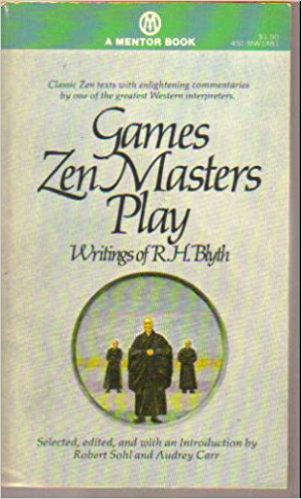
Games Zen Masters Play: The Writings of R. H. Blyth.
 Selected, edited, and with an introduction by Robert Sohl and Audrey Carr. New York, New American Library, 1976. 169
pages. ISBN: 0451624165. VSCL.
Selected, edited, and with an introduction by Robert Sohl and Audrey Carr. New York, New American Library, 1976. 169
pages. ISBN: 0451624165. VSCL.
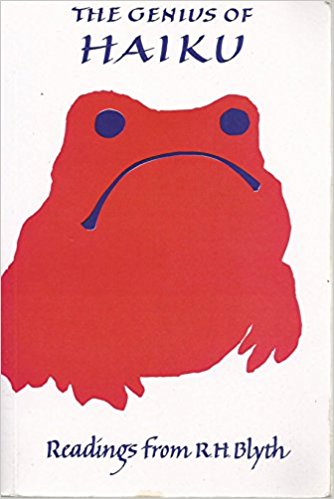
The Genius of
Haiku: Readings from R. H. Blyth on Poetry, Life, & Zen.
Edited by the staff of
the British Haiku Society. With an introduction by James Kirkup; which
includes an informative
biography of Blyth. Tokyo, The Hokuseido Press, 1995. 146 pages. ISBN:
4590009889. "This work introduced Dr. Blyth to an
English literary community that had been unfamiliar with his contributions. A
sympathetic, detailed biography is offered by the poet
James Kirkup. The book also contains selected articles by R. H. Blyth on topics such as
Basho, haiku, senryu, Wordsworth, and world haiku. VSCL.
Haiku. By R. H.
Blyth.
Tokyo, The Hokuseido Press, 1949-1952, 1960, 1968, 1970, 1982, 1997.
A landmark study in Four Volumes:
[In the spring of 2000, I purchased a new paperback version of this four volume set
from Powell's books in Portland,
Oregon. Each volume cost $28.00 retail. Used hardbound copies, depending upon
the condition of the book
and the market area, will cost between $25 and $100.] VSCL.
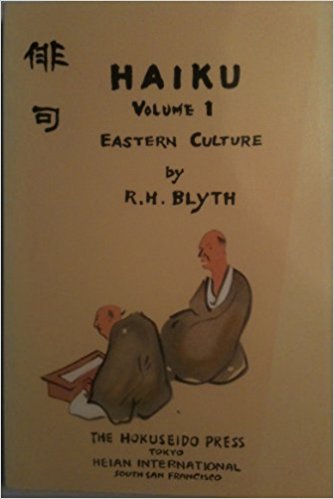
Eastern Culture. Volume I. Tokyo, The Hokuseido
Press, 1949. Various appendices and index.
26 illustrations. 422 pages. [Still available from The Hokuseido Press, 1997
Reissue. 350 pages. ISBN: 4590005727. Trade paperback.] Dedicated to Sakuo Hashimoto.
VSCL.
Haiku: Spring. Volume II. Tokyo, The Hokuseido Press,
1950. 382 pages. 9 illustrations.
[Still available from The Hokuseido Press, 1997 Reissue. 300 pages. ISBN:
4590005735.
Trade paperback.] Dedicated to Sakuo Hashimoto. VSCL.
Haiku: Summer - Autumn. Volume III. Tokyo, The
Hokuseido Press, 1951. 443 pages.
[Still available from The Hokuseido Press, 1997 Reissue. 340 pages. ISBN:
4590005743.]
Dedicated to Naoto Ichimada, Governor of the Bank of Japan. VSCL.
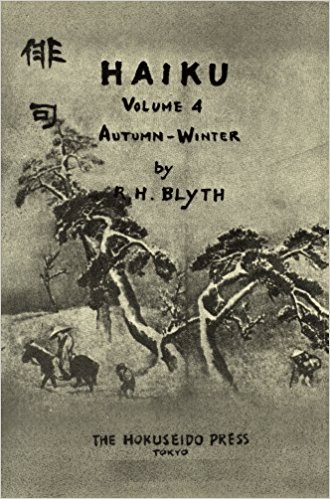
Haiku: Autumn - Winter. Includes Index. Volume IV. Tokyo,
The Hokuseido Press, 1952, 1968.
Index, xlii, 396 pages. 19 illustrations. [Still available from The Hokuseido
Press, 1997 Reissue.
330 pages. ISBN: 4590005751. Trade paperback.]
VSCL.
A History of Haiku. By R. H. Blyth. Tokyo,
The Hokuseido Press, 1963-1964. Two Volumes.
Volume 1: From Beginning to Issa. 440 pages. 5.5" x 7.5" Trade paperback with dust jacket: $27.95. ISBN: 0964704021.
Volume 2: From Issa to the Present. 430 pages. 5.5" x 7.5". Trade paperback with dust jacket: $27.95. ISBN: 096470403X.
How to Read English Poetry.
Humour in English literature; A Chronological Anthology.
By R. H. Blyth. Folcroft,
Pennsylvania, Folcroft Press, 1970. 250 pages.
Japanese Life and Character in Senryu. By R. H. Blyth. Tokyo, The Hokuseido Press, 1960. 630 pages.
Oriental Humour. By R. H. Blyth. Tokyo, The
Hokuseido Press, 1959, 1963.
582 pages. Comments.
Senryu: Japanese Satirical Verses. Translated and explained by R. H. Blyth. Tokyo, The Hokuseido Press, 1949. 230 pages. Includes hundreds of black and white sketches and some colored plates.
A Survey of English Literature.
VSCL = Valley Spirit Center Library, Red Bluff, California. Library
of Michael P. Garofalo.
A Week on the Concord and Merrimack River. By Henry
David Thoreau. Edited with an
introduction and notes by R. H. Blyth.
Zen and Zen Classics. By R. H. Blyth. Tokyo, The
Hokuseido Press [1960-1970], 5 Volumes:
Zen and Zen Classics,
Volume 1: From the Upanishads to Huineng.
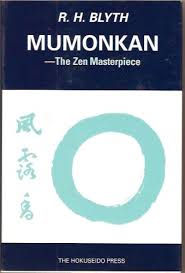
Volume Four. Mumonkan: The Zen Masterpiece.
The Hokuseido Press, 1966. 380 pages, index. 12 illustrations.
Paperback with dust jacket: 32.95. 5" x 7"
ISBN: 459001131x.
Volume Five. Twenty-Five Zen Essays: Christianity, Sex, Society, etc.
240 pp. Paperback with
dust jacket: $25.95. 5" x 7". ISBN:
4590011328.
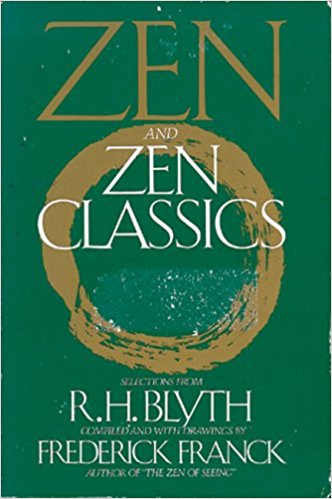
Zen and Zen Classics: Selections from R. H. Blyth.
Compiled and with drawings
by Frederick Franck. New York, Vintage Books, 1978. 289 pages.
 By R. H. Blyth. Tokyo, The Hokuseido
Press, 1942, 1996 printing. Index, 446 pages. ASIN: 0893460028.
Dedicated to Roshi
Myoshinji Betsu-In, and to Imamura Juzo. Review
by Kiley John Clark. VSCL.
By R. H. Blyth. Tokyo, The Hokuseido
Press, 1942, 1996 printing. Index, 446 pages. ASIN: 0893460028.
Dedicated to Roshi
Myoshinji Betsu-In, and to Imamura Juzo. Review
by Kiley John Clark. VSCL.
Letters to JWH from R. H. Blyth and from Harold G. Henderson are in the Archive of American Haiku, California State Library, Sacramento, California. (photo copies) (Photos of these letters from Dr. Blyth and Dr. Henderson are posted on an irregular basis in the Links section of the James Hackett web site.)
I Welcome Your
Comments, Ideas, Contributions, and Suggestions
Return to the Main Menu of this Webpage
Bibliography
Works About R. H. Blyth
The Genius of Haiku: Readings from R. H. Blyth on Poetry, Life, & Zen. With an introduction by James Kirkup; which includes an informative short biography of Blyth (pp. 3-11).
Spring Thunder: A Renaissance of the Works of R. H. Blyth.
By Ikuyo Yoshimura.
(Biographical information
about Ikuyo Yoshimura.)
Zen to Haiku: The Life of R. H. Blyth. By Ikuyo
Yoshimura. In Japanese. Tokyo,
Dohosha Suppan, 1996. 222 pages. LC: 98458746. This title is in
Japanese: R. H. Buraisu no Shogai: Zen to Haiku o Aishite.
Return to the Main Menu of this Webpage
Praise and Appreciation for R.H. Blyth
"For translations, the best
books are still those by R. H. Blyth."
- Michael Dylan Welch, Want
Fries with Those Haiku, 2000
"Blyth is sometimes perilous, naturally, since he's a
high-handed old poem himself, but he's also sublime - and who goes to poetry for safety anyway."
- J. D. Salinger
"To those of us who knew him, he was
first and foremost a poet with a wonderfully keen and sensitive perception."
- D. T. Suzuki
"Though not named as
such, the spirit of haiku – its techniques, poetics – exists in the epiphanies and best moments of every literature I’ve studied; it
appears to be imbedded everywhere. Maybe that perspec
haikuist?
R. H. Blyth’s Zen in English Literature and Oriental Classics was one
of the most important books I read in college."
- Michael McClintock, Interview
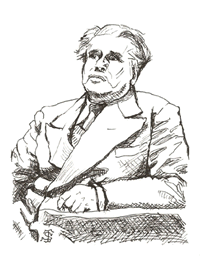
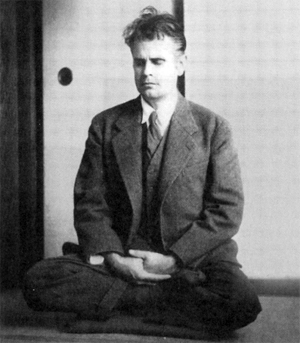
"Two men who may be called pillars of
the Western haiku movement,
Harold G. Henderson and R. H. Blyth."
- Elizabeth Searle Lamb, A Haiku Path, p. 5
"Yet most academic philosophers now
deride the babbling of mystics and metaphysicians as mere poetry, whereas I feel increasingly with R. H. Blyth and Paul Reps that reality is poetry."
- Alan Watts, Cloud-Hidden, Whereabouts Unknown, 1968, p.
144
"Zen in English Literature and
Oriental Classics set my life on the course I still maintain, and I trace my orientation to culture - to literature, rhetoric, art and music - to that single book."
- Robert Aitken, Original
Dwelling Place, p.24
"And it is impossible for an English
speaker with an open mind and any heart to read Blyth and not come away with several new enthusiasms."
- Terry Moore,
1996
"Blyth is also unusual in having more or less
single-handedly inspired a new genre of poetry in English - the English haiku. Richard Bowring calls his influence 'extraordinary', but when we look at the reason for this influence, I think that we have little doubt that the answer is that he was a translator of genius. The impact which Blyth's books had, quite independently, on a variety of writers is one testament to their literary quality as English."
- Adrian Pinnington
"R. H. Blyth 'more than any other is
responsible for spreading the doctrine that haiku is about nature, senryu about human nature.'
"
- Frogpond 11:2 1988
See also: Marlene Mountain: From
the Mountain - Backward
"To my mind, R. H. Blyth is destined
to become the indispensable interpreter of, and initiator into, Zen for the Western mind. His writings, until now far too inaccessible to the Western reader, seem to me the catalyst needed for a profound integration of Eastern and Western spirituality."
- Frederick Franck, Zen and Zen Classics, 1978, p.
xii.
"Blyth's four volume Haiku became especially popular at
this time [1950's] because his
translations were based on the assumption that the haiku was the poetic expression of
Zen. Not surprisingly, his books attracted the attention of the Beat school, most
notably writers such as Allen Ginsberg, Gary Snyder and Jack Kerouac,
all of whom had a prior interest in Zen."
- George Swede, Haiku in English in North
America
"Though Lafcadio Hearn's beginnings with
haiku were helpful to later
scholars and intrigued a number of poets early in the twentieth century they did not reveal the depth and awareness of the originals and as a result the birth of American haiku had to wait for the great translations
and interpretations of R. H. Blyth and Harold Henderson that came after the
mid-twentieth century. ... Hearn must have been an
influence on the great British translator of haiku, R. H. Blyth, whose four-volume Haiku,
published from 1949 to 1952, was a seminal work in starting the American
haiku movement. Blyth was able to fulfill in his translations the
ideals
of suggestiveness that Hearn praised in the originals; ideals Hearn himself
was rarely able to achieve in his own renderings."
- Cor van den Heuvel, "Lafcadio Hearn
and Haiku," Modern Haiku, Volume 33, # 2, Summer 2002
"The first book in English based on
the saijiki is R. H. Blyth's Haiku, published in four volumes from 1949 to 1952. After the first, background volume, the remaining three consist of a collection of Japanese haiku with translations, all organized by season, and within the seasons by traditional categories and about three hundred seasonal topics."
- William J. Higginson, The Haiku Seasons, 1996, p. 119
[saijiki]
"R. H. Blyth: I have just come from Korea, where I studied Zen with Kayama Taigi
Roshi of Myoshinji Betsuin.
D. T.
Suzuki: Is that so? Tell me, what is Zen?
R.H.
Blyth: As I understand it, there is no such thing.
D. T.
Suzuki: I can see you know something of Zen."
- As told by Robert Aitken, Original
Dwelling Place, p. 27
"On the very short shelf of my very favorite books are the four
volumes of R.H. Blyth's Haiku. Published by the Hokuseido Press in Tokyo right after the
war, Blyth's set presents many of the best haiku in Japanese characters, in
transliteration, and in his own spare, elegant translations. He also includes
reproductions of paintings in the haibun tradition. Blyth was an opinionated,
passionate reader, whose great tradition in English runs Chaucer, Shakespeare,
Milton, Wordsworth, Hopkins, Lawrence. He's also very appreciative of
Emerson, Dickinson, and, especially, Thoreau. (You can see why I like him.)
Blyth's main thesis in Haiku is that the haiku-tradition is the culmination of an
Asian wisdom-lineage that is rooted in Taoism and Buddhism and achieves its
flowering in the arts."
- John
Elder
"Then along came R. H. Blyth and his
four-volume Haiku, published in 1949-52.
This monumental study not only translated haiku in a sensible way--with
crisp, unrhyming, succinct, and evocative verses; it conveyed haiku spirit: how
the poet encounters Nature and self-in-Nature utterly open to the wonders of
the ordinary, the now-moment unadorned and unadulturated. Blyth's work with
its Zen focus and flavor was widely read in the fifties, and so completed the
task begun by Hearn and Yone. A new generation of readers learned how to
receive haiku. Jack Kerouac read Blyth; Richard Wright read Blyth; and within a
decade both of these writers and hundreds of their contemporaries worldwide were trying their hand at composing their own haiku."
- David Lanoue, Blyth
and Beyond
"Haiku entered into American
consciousness with R.H. Blyth's monumental, post-War, four-volume work, Haiku, published between 1949 and 1952."
- Jack Foley, The Alsop Review
"I will always be grateful to R. H.
Blyth for his little books of commentary and translation, and I continue to
read them for the sheer intelligence of the prose."
- Sam Hamill, Sitting Zen, Working Zen, Feminist Zen
"I found R.H. Blyth's books on
haiku on the shelf of a bookstore in 1966 when I was in high school. I guess what attracted me to it was that it combined poetry with a philosophy of life based on self-awareness. What could be better?"
- Lee Gurga, 2002, Interview
"As a translator I may be blessed in not working in English,
thus being able to read Blyth as a source, not an idol. But as a
source of zeal he sure is a paragon, whatever his shortcomings."
- Kai Nieminen
"I think that for many native
English-speakers (of the 50s-80s anyway), Blyth's translations "are" Japanese haiku. It is a mark of
Blyth's stylistic modernity that we continue to find his poetic style largely
contemporary, 60 years later."
- Richard Gilbert, e-mail 9 March 2002, Quiet
Site
"My life as a Zen Buddhist began with a
good book, in a civilian
internment camp in Kobe, Japan. One evening during the second
winter of the Pacific War, a guard entered my dorm, waving a book,
an mumbling drunkenly, "this book, my English teacher, ..."
Rising involuntarily from my bed, I boldly took it from his hand,
and never gave it back. It was R. H. Blyth's Zen in English Literature and Oriental Classics, then recently published. When I got back in my bunk, opened the plain cover of Blyth's
book, I had been searching for it all my life without knowing
its title, its author, or its subject. As I read Blyth's words
over and over, new and marvelous vistas of culture and thought
opened for me. I felt that I was uncovering primordial configurations
of myself. Now as I look at the book, its flaws and mistakes jump
out at me, but at the time it was the communiqué I was unconsciously awaiting."
- Robert Aitken, from the foreword to The
Roaring Stream, 1996
"Dear Mr. Garofalo,
My name is Gretchen Mittwer, and I reside in Kyoto. I hope that this message
finds you in good spirits, enjoying the beauty of nature as autumn deepens and
we move close to the end of another year.
I am in possession of an old copy of R.H. Blyth’s official Gakushuin record
(written in Japanese); basically a record of his employment at Gakushuin. It was
among the papers kept by my father, Henry Mittwer (d. 2012), who was a priest at
Tenryuji temple, Kyoto. I do not know how or why my father came into possession
of the copy of the record, but do know that my father was a long friend of
Robert Aitkin, who was personally acquainted with Blyth. I am also in possession
of the 4-vol. Haiku translations by Blyth, published by Hokuseido, which were
among the books Henry Mittwer’s father, my grandfather Richard Julius Mittwer (a
Japanophile of basically the same era as Blyth) had.
Because I have come into possession of that old copy of the Gakushuin record, I
have been conducting a bit of internet research about Gakushuin and Blyth, and
came across your http://www.gardendigest.com/zen/blyth.htm I wish to express my
appreciation for your research and for making that information available.
The reason for this message is that I believe the following two dates in your
chronology of Blyth are inaccurate:
1956 Awarded a Doctorate in Literature from Tokyo University.
1957 Awarded the Zuihosho (Order of Merit) Fourth Grade by the Japanese
government.
According to the record that I have (and also other accounts found on the
internet), Blyth received the doctorate in Showa 29 (1954), on the 21st day of
November that year, to be exact, and he was awarded the medal in Showa 34
(1951), on the 19th day of May that year.
I would be happy to send you a scanned copy of the Japanese record if you so
desire. Unfortunately, it is rather faded and the writing is quite scratchy.
Thank you for your attention to this. I hope that I might receive a response
soon."
Sincerely,
Gretchen Mittwer, Kyoto, Email on October 9, 2016
Return to the Main Menu of this Webpage
I Welcome Your
Comments, Ideas, Contributions, and Suggestions
Distributed on the Internet by Michael P. Garofalo
I Welcome Your Comments,
Ideas, Contributions, and Suggestions
Mike Garofalo's Poetry Notebook III
Zen Poetry: R. H. Blyth.
This webpage was first distributed on the Internet on March 3, 2003
This webpage was last improved, updated, modified, edited, graphics added, or revised on June 14, 2018.
Green Way Research, Red Bluff,
North Sacramento Valley, California, 1998-2017
Green Way Research, Vancouver, Columbia River Valley, Washington, 2017-
Short Poems and Haiku by Michael P. Garofalo
Haiku: Links, References and Resources