Ten Principles for Living
"1. Never obey
anyone's command unless it is coming from within you also.
2. There is no God other than life itself.
3. Truth is within you, do not search for it elsewhere.
4. Love is prayer.
5. To become a nothingness is the door to truth. Nothingness
itself is the means, the goal and attainment.
6. Life is now and here.
7. Live wakefully.
8. Do not swim – float.
9. Die each moment so that you can be new each moment.
10. Do not search. That which is, is. Stop and see."
- Osho (Acharya Bhagwan Shree Rajneesh),
Courage: The Joy of Living Dangerously
Evaluation of Your Personal Strengths
Wisdom and Knowledge
1. Curiosity and Interest in the World
2. Love of Learning
3. Judgment and Critical Thinking, Open-Mindedness
4. Ingenuity, Originality, Practical Intelligence, Street Smarts
5. Social Intelligence, Personal Intelligence, Emotional Intelligence
6. Perspective
Courage
7. Valor and Bravery
8. Perseverance, Industry, Diligence
9. Integrity, Genuineness, Honesty
Humanity and Love
10. Kindness and Generosity
11. Loving and Allowing Oneself to be Loved
Justice
12. Citizenship, Duty, Teamwork, Loyalty
13. Fairness and Equity
14. Leadership
Temperance
15. Self-Control
16. Prudence, Discretion, Caution
17. Humility, Modesty
Transcendence
18. Appreciation of Beauty and Excellence
19. Gratitude
20. Hope, Optimism, Future-Mindedness
21. Spirituality, Sense of Purpose, Faith, Religiousness
22. Forgiveness and Mercy
23. Playfulness and Humor
24. Zest, Passion, Enthusiasm
- Martin E. P. Seligman, Ph.D.,
Authentic Happiness, 2002, pp. 134-161,
Website
Seven Fundamentals
1. Set goals.
2. A detailed management plan for your present resources.
3. Have a detailed plan for the use of your time.
4. A consistent plan for the gathering of knowledge.
5. Constant association with people who have a common interest in
progress, success, ideas, and philosophy.
6. A consistent plan for developing all your skills.
7. A consistent plan for figuring ways to live uniquely.
- Jim Rohn,
Seven Fundamentals for Wealth and Happiness,
Book, 1996

Ten Golden
Rules for Living the Good Life
“1.
Examine life, engage life with vengeance; always search for new pleasures and
new destines to reach with your mind.
2. Worry only about the things that are in your control,
the things that
can be influenced and changed by your actions, not about the things that are
beyond your capacity to direct or alter.
3. Treasure Friendship, the reciprocal attachment that fills the need for
affiliation. Friendship cannot be acquired in the market place, but must be
nurtured and treasured in relations imbued with trust and amity.
4. Experience True Pleasure.
Avoid shallow
and transient pleasures. Keep your life simple. Seek calming pleasures that
contribute to peace of mind. True pleasure is disciplined and restrained.
5. Master Yourself. Resist any external force that might delimit thought and
action; stop deceiving yourself, believing only what is personally useful and
convenient; complete liberty necessitates a struggle within, a battle to subdue
negative psychological and spiritual forces that preclude a healthy existence;
self mastery requires ruthless cador.
6. Avoid Excess. Live life in harmony and balance. Avoid excesses. Even good
things, pursued or attained without moderation, can become a source of misery
and suffering.
7. Be a Responsible Human Being.
Approach
yourself with honesty and thoroughness; maintain a kind of spiritual hygiene;
stop the blame-shifting for your errors and shortcomings.
8. Don’t Be a Prosperous Fool. Prosperity by itself, is not a cure-all against
an ill-led life, and may be a source of dangerous foolishness. Money is a
necessary but not a sufficient condition for the good life, for happiness and
wisdom.
9. Don’t Do Evil to Others. Evildoing is a dangerous habit, a kind of reflex
too quickly resorted to and too easily justified that has a lasting and damaging
effect upon the quest for the good life. Harming others claims two victims—the
receiver of the harm, and the victimizer, the one who does harm.
10. Kindness towards others tends to be rewarded.
Kindness to others is a good habit that supports and reinforces the quest for
the good life. Helping others bestows a sense of satisfaction that has two
beneficiaries—the beneficiary, the receiver of the help, and the benefactor, the
one who provides the help.”
- By M. A.
Soupious and Panos Mourdoukoutas,
The Ten Golden Rules: Ancient Wisdom from the Greek
Philosophers on Living the Good Life, 2009.
Adult Life Tasks:
Identity
Intimacy
Career Consolidation
Generativity
Keeper of the Meaning
Integrity
-
By George E. Vaillant, M.D.. Aging
Well: Surprising Guideposts to a Happier Life from the Landmark Harvard Study of
Adult Development ,
2002.
,
2002.
Serenity Prayer
"Give me the serenity to accept
the things that cannot be changed,
the courage to change the things
which can be changed,
and the wisdom to distinguish
one from the other.
Living one day at a time,
Enjoying one moment at a time,
accepting hardship as a pathway to peace."
- Reinhold Niebuhr, Serenity Prayer
Version, 1937
"For every ailment under the sun
There is a remedy, or there is none;
If there be one, try to find it;
If there be none, never mind it."
- Mother Goose Rhyme, 1695
The Alphabet of Spiritual
Literacy
A Attention
B Beauty, Being Present
C Compassion, Connections
D Devotion
E Enthusiasm
F Faith, Forgiveness
G Grace, Gratitude
H Hope, Hospitality
I Imagination
J Joy, Justice
K Kindness
L Listening, Love
M Meaning
N Nurturing
O Openness
P Peace, Play
Q Questing
R Reverence
S Shadow, Silence
T Teachers, Transformation
U Unity
V Vision
W Wonder
X The Mystery
Y Yearning, You
Z Zeal
- Frederic and Mary Ann Brussat,
Spiritual Literacy: Reading the Sacred in Everyday Life ,
1996.
,
1996.
Three Attributes of a Good
Life
Good Fortune (Fu)
Prosperity (Lu)
Longevity (Shou)
-
Fu Lu Shou
福禄寿
Chinese Taoist Deities, circa 1368 CE

Shou, Lu, Fu
Principles for Living in Balance
"1. Attitude
2. Accountability
3. Commitment
4. Supportive Relationships
5. Service
6. Personal Mastery
7. Faith"
- Joel Levey and Michele Levey,
Living in
Balance, 2014
Aging - Bibliography,
Links, Resources
Process Philosophy
Ten Worthy Goals
1. Mellowness of mind
2. A healthy, balanced life
3. An unobstructed, undefeated spirit
4. Loving people and rendering service
5. Unifying the body and mind
6. The rich emotion of enjoying simple relationships and things
7. Frequent self-examination of one's personal and public life
8. Avoidance of obsession or extravagance
9. Humility
10. Constantly collecting the floating emotions that take you out of your
center
- Hua-Ching Ni,
The Gentle Path of Spiritual
Progress, 1990.

The Ten American Indian
Commandments
"Remain close to the
Great Spirit.
Show great respect for your fellow beings.
Give assistance and kindness wherever needed.
Be truthful and honest at all times.
Do what you know to be right.
Look after the well-being of mind and body.
Treat the Earth and all the dwell thereon with respect.
Take full responsibility for your actions.
Dedicate a share of your efforts to the greater good.
Work together for the benefit of all mankind."
-
Poster of the Ten American Indian Commandments, 2000
Seven Keys to Health and Happiness
"Practice Silence - Wisdom is a state of emptiness, listening, and
attentiveness.
Learn from Nature - Every tree, every animal, every stone has a lesson
to teach.
Find and Honor Your Life Purpose - Your purpose is a gift from the
Great Spirit.
Respect Your Ancestors and Ancestry - All people have indigenous roots,
and no culture has a monopoly on wisdom.
Maintain Emotional Balance - Keep your emotions calm and cultivate humor
Eat According to Your Genes - Follow the diet of our
hunter-gatherer ancestors.
Get Plenty of Exercise - Stand and move with dignity, and breathe slowly."
- Ken Cohen,
Native Wisdom: Seven Keys to Health and Happiness, 2003.
Cloud Hands Blog
Virtues and a Good Life
Pragmatism and American
Philosophy
Spirit of Gardening
Epicureanism
Fitness and Well Being
Aging Well and Values
The Ten Paramitas of Buddhism
Virtue Ethics
Process
Philosophy
How to Live a Good
Life: Advice from Wise Persons
Dharmapada Sutra
of the Buddha
Tao Te Ching by
Lao Tzu
Stoicism
Green Way Research Subject Index

This work is licensed under a Creative Commons Attribution-NonCommercial-NoDerivatives 4.0 International License,
© 2022 CCA 4.0
Compiled by Michael Garofalo,
Green Way Research, Vancouver,
Washington © 2004-2022
CCA 4.0
Ground Rules for
Living
"1. Be Positive.
2. Accept Yourself.
3. Let Go.
4. Express Your Love.
5. Accept Full Responsibility for Your Life.
6. Forgive Yourself.
7. Handle What Does Not Work.
8. Let Go of Resentment.
9. Don't Overspend.
10. Find a Dream to Go For.
11. Serve. Have Your Life Be More Than You.
12. Experience Your Spirituality."
- Bill Ferguson,
Mastery of Life,
2006
Maintaining Good Health After Age 50
1. Manage your
blood sugar
2. Manage your blood pressure
3. Maintain a healthy weight
4. Eat a heart healthy diet
5. Reduce salt intake
6. Drink enough water
7. Limit alcohol
8. Don't smoke
9. Limit over-the-counter pain medication
10. Reduce stress
11. Exercise regularly
-
Healthline, 2020
Discourse on Happiness
"Not
to be associated with the foolish ones,
to live in the company of wise people,
honoring those who are worth honoring –
this is the greatest happiness.
"To live in
a good environment,
to have planted good seeds,
and to realize that you are on the right path –
this is the greatest happiness.
To have a
chance to learn and grow,
to be skillful in your profession or craft,
practicing the percepts and loving speech –
this is the greatest happiness.
To be
able to serve and support your parents,
to cherish your own family,
to have a vocation that brings you joy –
this is the greatest happiness.
To live
honestly, generous in giving,
to offer support to relatives and friends,
living a life of blameless conduct –
this is the greatest happiness.
To avoid
unwholesome actions,
not caught by alcoholism or drugs,
and to be diligent in doing good things –
this is the greatest happiness.
To be humble
and polite in manner,
to be grateful and content with a simple life,
not missing the occasion to learn the Dharma –
this is the greatest happiness.
To
persevere and be open to change,
to have regular contact with monks and nuns,
and to fully participate in Dharma discussions –
this is the greatest happiness.
To live in
the world
with your heart undisturbed by the world,
with all sorrows ended, dwelling in peace –
this is the greatest happiness.
For he or
she who accomplishes this,
unvanquished wherever she goes,
always he is safe and happy –
happiness lives within oneself."
- The
Buddha, Mahamangala Sutta,
Sutta Nipata, 2.4
Found in
Chanting from the Heart, by Thich Nhat Hahn,
2002, p.
270
Seven Core
Values
"1. The inherent worth and dignity of every person.
2. Justice, equity and compassion in human relations.
3. Acceptance of one another and encouragement to spiritual growth
in our congregations.
4. A free and responsible search for truth and meaning.
5. The right of conscience and the use of the democratic process
within our congregations and in society at large.
6. The goal of world community with peace, liberty, and justice for
all.
7. Respect for the interdependent web of all existence of which we
are a part."
-
Unitarian Universalist
Seven Principles
A Taoist Monk's Goals
"I work to bring harmony and balance to my community and the world.
I believe we must evolve rapidly to help all sentient beings survive and thrive.
Daoist teachings and practices offer a uniquely effective, powerful and effortless path through life.
Love, wisdom, charity, and insight arise in the individual and spread outward to the community, country, and world.
An enlightened mind requires a foundation in a strong, healthy body.
A plant based (vegan) diet is a gift to our own health as well as millions of tortured animals and a warming world.
Discrimination based on race, gender identity, religious beliefs, or sexual preference is a cancer best cut from society.
Always do the right thing because it is the right thing to do.
The morally bankrupt destruction of the natural world doom sentences us all to a life of disconnection and suffering.
Acting with compassion, frugality, and humility benefits the world and gives us each an all-important sense of purpose.
A regard for all sentient beings, health, justice, and spiritually must replace speed-and-greed materialism.
In engaging virtual worlds over the real one, we become less human and loose the life we evolved to life.
- Arthur Rosenthal, Taoist Monk Yun Rou (Soft Cloud), 2022
The Ten Commitments to Live a Truly
Accountable Life
"Commit to
discover and realize your potential ... and help others reach theirs
Commit to the truth
Commit to the values
Commit to "It's All of Us"
Commit to embrace faults and failures as well as opportunities and
successes
Commit to sound financial principles
Commit to a safe space
Commit to "my word is my bond"
Commit to stand strong when all hell breaks loose
Commit to a good reputation."
-
Sam Silverstein, 2019,
I am Accountable
The Ten Commandments of Health
"East Wisely
Drink Plentifully of Water
Eliminate Thoroughly
Bathe Cleanly
Exercise Rationally
Accept Inevitables (Don't Worry)
Play Enthusiastically
Relax Completely
Sleep Sufficiently
Check Up Occasionally
Give 5% of your time to keeping well.
You won't have to give 100% to getting over being sick."
- George W. Claver, M.D.
Physician to the U.S. Congress in 1928
Five Ways to Be Real
Through the Practice of Dzogchen
"1.
Naturalness and Simplicity
Rely on the natural state. Be yourself, your true unaltered self.
Everything we need is within
the natural mind - innately whole and complete. So relax.
2. Authenticity, Non-contrivance,
Non-fabrication
There is nirvanic peace in things left just as they are. Striving and
struggle is extra. Leave
it as it is and rest the weary heart and mind. See through everything, be
through everything;
and remain free, luminous and complete.
3. Openness and Oneness
Stay open-minded and inclusive. Pure presence is a state of nonjudgmental,
non-interfering
choiceless awareness or panoramic attention to the "is-ness" and "now-ness" of
all things.
Be open to your experience. Let go and let things fall into place as they
will. Perhaps
wherever they fall is the right
place.
4. Awareness and Wisdom
Present awareness knows and sees what is, as it is. Innate wakefulness is
wise and effective
in its own brand of insight and discernment combined with uncommon common sense.
5. Spontaneous Energy Flow
With freedom and decontraction, inexhaustible uninhibited energy is released,
surging forth,
bubbling up from within. When we let go and loosen our tight-fisted
grasping, or repetitive
holding patterns, we are buoyed up and become one with the flow. This is
the natural flow,
the sacred zone masters describe. You can access it at will."
- Lama Surya Das,
Awakening to the
Sacred, 1999.


Characteristics of the More Fully-Functioning Individual
"Nonconformity and Individuality
Self-Awareness
Acceptance of Ambiguity and Uncertainty
Tolerance
Acceptance of Human Animality
Commitment and Intrinsic Enjoyment
Creativity and Originality
Social Interest and Ethical Trust
Enlightened Self-Interest
Self-Direction
Flexibility and Scientific Outlook
Unconditional Self-Acceptance
Risk-Taking and Experimenting
Long-Range Hedonism
Work and Practice"
- Albert Ellis,
The Albert Ellis Reader,
1998.
Noble Eightfold Path of the Buddha
"I will attempt to live my life moving toward:
1. A balanced wholeness of perspective that centers around the idea of
achieving a complete experience of life. [Right Views]
2. A balanced wholeness of resolve in which I deliberately move away from
what is toxic and move toward that which is nourishing. [Right Intentions]
3. A balanced wholeness of the manner, content, and intent of my speech.
[Right Speech]
4. A balanced wholeness of life-affirming moral conduct. [Right Action]
5. A balanced wholeness of a profession that affirms life and does not
obstruct or negate it. [Right Livelihood]
6. A balanced wholeness of life-affirming spiritual activity.
[Right Efforts]
7. A balanced wholeness of mindful awareness and alertness as tools for
profound living. [Right Mindfulness]
8. A balanced wholeness of concentrated bodymind skills as tools for fully
awakening my Buddha Nature. [Right Concentration]"
-
The "balanced wholeness" version is from the Venerable Reverend John Bright-Fey,
The
Whole Heart of Zen: The Complete Teachings from the Oral Tradition of Ta-Mo,
p. 254.
The [short version] is a rather standard formulation of Siddhartha
Buddha's Noble Eightfold Path
Four Principles for a Successful Life
"1. The practice of giving love without expectations.
2. To seeking true knowledge of ourselves and of the meaning of existence.
3. Practicing reflection to understand the mistakes we made in life and to
release ourselves from attachment that causes suffering.
4. To develop ourselves so that we can help guide others and to become useful in
the world - to, ultimately, evolve spiritually."
- Ryuho Okawa,
The Laws of Happiness, 2004
Cloud Hands Blog
Virtues and a Good Life
Epicureanism
Pragmatism and American
Philosophy
Virtue Ethics
Fitness and Well Being
Process Philosophy
How to Live a Good
Life: Advice from Wise Persons
Aging Well and Values
The Ten Paramitas of Buddhism
Dharmapada Sutra
of the Buddha
Tao Te Ching by
Lao Tzu
Stoicism
Green
Way Research Subject Index
This work is licensed under a Creative Commons Attribution-NonCommercial-NoDerivatives 4.0 International License,
© 2022 CCA 4.0
Compiled by Michael Garofalo,
Green Way Research, Vancouver,
Washington © 2004-2022
CCA 4.0
Nine Heart Paths to Healing and Abundance
Joy
Self-Control
Generosity
Peace
Faithfulness
Patience
Kindness
Gentleness
Love
- Karen Speerstra,
Sophia: The Feminine Face of God: Nine Heart Paths to Healing and Abundance ,
2011
,
2011
Tips
for Living a Good Life
"Approve of yourself
Your limitations may just be in your mind
Lighten up and have some fun
Let go of anger
Release yourself from entitlement
If you are taking a different path, prepare for reactions
Keep your focus steadily on what you want
Don’t focus so much on making yourself feel good
Do what you want to do"
- From Mark Twain, summarized by Henrick
Edberg,
The
Positivity Blog
Nine Essential Skills that Make You Resilient
Composure
Patience
Optimism
Gratitude
Acceptance
Kindness
Sense of Purpose
Forgiveness
Connection
- Amit Sood, MD, 7/11/2022
Rationality
"Rationality is not just a matter of having some
reasons for what one does, but of aligning one's beliefs, actions, and
evaluations effectively with the best or strongest available reasons.
It pivots on doing that which, everything considered, one is "well advised"
to do. The matter of giving or following the course of intelligent and
responsible advice is the crux of rationality. There is nothing
complex or arcane about the sorts of considerations that determine good and
cogent reasons in this regard. It is a matter of the sort of things
that conduce to one's real advantage, to one's best interests. This is
a matter of furthering the full and rewarding life, preeminently involving
the sort of things that make us happier and/or better persons in what
relates to our benefit and the benefit of those who do and should matter for
us (our family, community, and fellows at large, and the advancement of our
individual and communal values.) Practical rationality thus calls for
appropriate resolutions intelligently arrived at and sensibly implemented.
It is geared to the sensible pursuit of appropriate ends. The idea of
optimization, of seeking for the best among visibly available alternatives,
lies at the very core of rationality."
- Nicholas Rescher,
A System of Pragmatic Idealism, Volume I 1992, p.9
Thirteen Necessary or Desirable Virtues
"1. Temperance. Eat not to dullness; drink not
to elevation.
2. Silence. Speak not but what may benefit others or yourself;
avoid trifling conversation.
3. Order. Let all your things have their places; let each part
of your business have its time.
4. Resolution. Resolve to perform what you ought; perform
without fail what you resolve.
5. Frugality. Make no expense but to do good to others or
yourself; waste nothing.
6. Industry. Lose no time; be always employed in something
useful; cut off all unnecessary actions.
7. Sincerity. Use not hurtful deceit; think innocently and
justly, and, if you speak, speak accordingly.
8. Justice. Wrong none by doing injuries, or omitting the
benefits that are your duty.
9. Moderation. Avoid extremes; forbear resenting injuries so
much as you think they deserve.
10. Cleanliness. Tolerate no uncleanliness in body, clothes, or
habitation.
11. Tranquility. Be not disturbed by trifles, or at accidents
common or unavoidable.
12. Chastity. Rarely use venery but for health or offspring;
never to dullness, weakness, or injury of your own or another's peace or
reputation.
13. Humility. Imitate Jesus and Socrates."
- Benjamin Franklin, Autobiography 1771-1784
From
The Portable Enlightenment Reader, edited by Isaac
Kramnick, 1995, p.484
Impediments to Changing Your Behavior
"1. "Relying on willpower for long-term change
2. Attempting big leaps instead of baby steps
3. Ignoring how environment shapes behavior
4. Trying to stop old behaviors instead of creating new ones
5. Blaming failures on lack of motivation
6. Underestimating the power of triggers
7. Believing that information leads to action
8. Focusing on abstract goals instead of concrete behaviors
9. Seeking to change a behavior forever, not for a short time
10. Assuming that behavior change is difficult.”
- Stanford University, Persuasive
Tech Lab, 2019
Persistence and
Determination
Changing Yourself
“1) Psych: Getting Ready
2) Prep: Planning Before Leaping
3) Perspire: Taking Action;
4) Persevere: Managing Slips;
5) Persist: Maintaining Change.”
- John Norcross, Changelology,
2012
Virtue Ethics
Process Philosophy
Ten Basic Epicurean Values
1)
Prudence
2) Self-management
3) Self-sufficiency
4) Serenity
5) Simplicity
6) Friendliness
7) Honesty
8) Generosity
9) Cheerfulness
10) Gentleness
-
Epicurus, 341-270 BCE,
Epicureanism
Lessons from the Alchemist
1. Fear is a bigger obstacle than the obstacle itself
2. What is "true" will always endure
3. Break the monotony
4. Embrace the present
5. Your success has a ripple-effect
6. Make the decision
7. Be unrealistic
8. Keep getting back up
9. Focus on your own journey
10. Always take action
- Paulo Coehlo, The Alchemist, 2015
Seven Habits of Highly Effective People
1. Be Proactive
2. Begin with the End in Mind
3. Put First Things First
4. Think Win-Win
5. Seek First to Understand, Then to be Understood
6. Synergize
7. Sharpen the Saw - Continuous Improvement, Renewal, Readiness
- Stephen R. Covey,
The Seven Habits of Highly Effective People, 1989
Six Pillars of Self-Esteem
1. Living Consciously: The practice of being
aware of what one is doing while one is doing it; or, mindfulness.
2. Accept Yourself: The practice of owning truths regarding
one's thoughts, emotions, and behaviors; of being kind toward oneself with
respect to them;
and of being "for" oneself in a
basic sense.
3. Take Responsibility for Your Experiences: The practice of owning
one's authorship of one's actions and of owning one's capacity to be the
cause of
the effects one desires.
4. Assert Who You Are: the practice of treating one's needs and
interests with respect and of expressing them in appropriate ways.
5. Live Purposely: The practice of formulating goals and of
formulating and implementing action plans to achieve them.
6. Maintain Your Integrity: The practice of maintaining alignment
between one’s behaviors and convictions.
- Nathaniel Branden,
Six Pillars of Self-Esteem, 1995
Ten Rules for the Good Life
"1. Never put off till tomorrow what you can do today.
2. Never trouble another for what you can do yourself.
3. Never spend your money before you have it.
4. Never buy what you do not want because it is cheap; it will never be dear to
you.
5. Pride costs us more than hunger, thirst, and cold.
6. Never repent of having eaten too little.
7. Nothing is troublesome that we do willingly.
8. Don't let the evils which have never happened cost you pain.
9. Always take things by their smooth handle.
10. When angry, count to ten before you speak; if very angry, count to one
hundred."
- Thomas Jefferson,
Ten Rules for the Good Life,
1790.
Aging - Bibliography,
Links, Resources
Process Philosophy
"A Reason for Living": Ikigai
1. Stay active and don't retire
2. Leave urgency behind and adopt a slower pace of life.
3. Only eat until you are 80 per cent full.
4. Surround yourself with good friends.
5. Get in shape through daily, gentle exercise.
6. Smile and acknowledge people around you.
7. Reconnect with nature
8. Give thanks to anything that brightens our day and makes us feel
alive.
9. Live in the moment.
10. Follow your Ikigai.
Ikigai "entails actions of devoting oneself to pursuits one enjoys and
is associated with feelings of accomplishment and fulfillment." -
Michiko Kumano
- Hector Garcia and Francesc
Miralles,
Ikigai: The Japanese Secret to a Long and Happy Life, 2017.
Nine Rules for Living the Good Life
Be Grateful.
Be Smart.
Be Involved.
Be Clean.
Be True.
Be Positive.
Be Humble.
Be Still.
Be Prayerful.
- Gordon B. Hinkley,
Way to Be!
Nine Ways to Be Happy,
2002.
Reaching a New Level of
Well-Being and Delight
"Move your awareness from Form to Energy
Explore realms of being outside your everyday experience
Break the grip of the ego
Honor the holy Self within
Accept a new life, free of worry and filled with joy
Keys: Love. Hope. Fulfillment. Security. Harmony. Freedom."
- John Randolf Price,
Living a Life of Joy
The Thinker's Way to Solve Problems
Have I accepted the problem?
What do I know about the problem?
How can I define the problem?
What are the alternatives?
What are the advantages and/or disadvantages of each alternative?
What is the solution?
How well is the solution working?
- John Chaffee,
The Thinker's Way: 8 Steps to a Richer Life, 1998
Principles for Purposeful Living
1. Unity
2. Self-Determination
3. Collective Work and Responsibility
4. Cooperative Economics
5. Purpose
6. Creativity
7. Faith
- Barbara Dixon,
Seven Principles for Purposeful
Living
Seven Pleasures
Dancing
Reading
Walking
Looking
Listening
Swimming
Writing
- Willard Spiegelman,
Seven Pleasures: Essays on Ordinary Happiness
Advice for Young People
"Young people need compassion and guidance,
not obscure mysticism.
Here are some guidelines for young people:
Remember that you are always your own person. Do not surrender your
mind, heart, or body to any person. Never compromise your dignity for
any reason.
Maintain your health with sound diet, hygiene, exercise, and clean
living. Don't engage in drugs or drinking.
Money is never more important that your body and mind, but you must
work and support yourself. Never depend on others for your livelihood.
Choose your friends and living situation carefully, for they will
influence you. Find a mentor you can trust, one who can answer your
every question, but never give up responsibility for your own life. No
one lives your life for you.
A good education is always an asset.
Emotions are transitory and are not a good way to make decisions.
Every day, you must make decisions. Everything you do will have
irrevocable effects upon your life. Before you go down any path,
consider carefully. Rivers very rarely reverse course.
Know evil, but do not do evil yourself. Remember, there is a way
out of the delusions of life. When you weary of the world, find someone
who will show you Tao."
- Deng Ming-Dao,
365 Tao: Daily Meditations,
1992
Five Keys to Mindful Loving
"Fear can be a warning to
be more cautious.
Desire allows you to open and
reach out to others.
Judgment fosters viewing a
situation with intelligence.
Control is needed to maintain some stability in your everyday
life.
Fantasy stimulates the
imagination and fosters creativity."
- David Richo,
How to Be an Adult in Relationships: The Five Keys to Mindful Loving
12 Rules for Life
Stand up straight with your shoulders back
Treat yourself like someone you are responsible for helping
Make friends with people who want the best for you
Compare yourself to who you were yesterday, not to who someone else is today
Do not let your children do anything that makes you dislike them
Set your house in perfect order before you criticize the world
Pursue what is meaningful, not what is expedient
Tell the truth – or, at least, don't lie
Assume that the person you are listening to might know something you don't
Be precise in your speech
Do not bother children when they are skateboarding
Pet a cat when you encounter one on the street
- Jordan B. Peterson,
12 Rules For Life: An Antidote to Chaos, 2018
"Nine Ways of Cultivating the Tao
Cultivating Harmony
Cultivating the Spirit
Cultivating the Energy
Cultivating Right Action
Cultivating Contentment
Cultivating Simplicity
Cultivating Clarity
Cultivating Humility
Cultivating Softness"
- Eva Wong,
Being Taoist: Wisdom for Living a Balanced Life, 2015,
pp.105-115
Boy Scout Goals
Trustworthy: Tell the truth and keep promises. People can depend on you.
Loyal: Show that you care about your family, friends, Scout leaders, school, and country.
Helpful: Volunteer to help others without expecting a reward.
Friendly: Be a friend to everyone, even people who are very different from you.
Courteous: Be polite to everyone and always use good manners.
Kind: Treat others as you want to be treated. Never harm or kill any living thing without good reason.
Obedient: Follow the rules of your family, school, and pack. Obey the laws of your community and country.
Cheerful: Look for the bright side of life. Cheerfully do tasks that come your way. Try to help others be happy.
Thrifty: Work to pay your own way. Try not to be wasteful. Use time, food, supplies, and natural resources wisely.
Brave: Face difficult situations even when you feel afraid. Do what you think is right despite what others might be doing or saying.
Clean: Keep your body and mind fit. Help keep your home and community clean.
Reverent. Be reverent toward God. Be faithful in your religious duties. Respect the beliefs of others.
- Boy Scouts of America
Spartan Core Values
Self-Awareness, Know Yourself, Identify Your North Star
Make a Commitment, Be Decicated
Enthusiasm, Passion, Energized
Discipline, Practice Diligence, Delay Gratification
Prioritization, Put Your House in Order, Maximize Your Time
Grit, Push to Your Limits, Not Yielding
Cougage, Face you Fears and Your Failures, Embrace Adversity
Optimism, Look for the Positives, Adjust Your Frame of Reference
Integrity, Act Homestly, Be Honorable
Wholeness, Live as a Spartan, Achievement of Goals
- Joe De Sena, The Spartan Way: East Better, Train Better, Think Better, Be Better; 2018
The Calculus of
Felicity
Intensity: How powerful is the pleasure?
Duration: How long lasting is the pleasure?
Certainty: How guaranteed is the pleasure?
Proximity: How close is the pleasure?
Fecundity: Will this pleasurable activity generate additional
pleasures?
Purity: How pain-free is this particular pleasure?
Extent: How many other persons will experience this pleasure?
-
Jeremy Bentham,
1748-1832
Ways to Lift Your
Spirits, Boost Your Mood
Revitalize Yourself, Banish the Blues
Be grateful
for the good in your life.
Give yourself permission to be human.
Brighten someone’s day.
Learn something new.
Listen to upbeat music.
Do some exercise on a regular basis.
Simplify your life, remove clutter, and clean.
Go for a walk.
Enjoy sex and discover romance.
Get organized.
Do a good deed or volunteer.
Smile and put on a happy face.
Indulge your senses.
Seek and cultivate beauty.
Take time to breathe deeply.
Look at some old photos.
Focus on the positive.
Forgive yourself.
Get some fresh air.
Eat often and eat light.
Begin a program of meditation or contemplation.
Talk with your physician or counselor.
Cook and prepare a lovely and tasty meal.
Eat something nutritious like nuts or fruit.
Pamper yourself.
Alter your routines in some way.
Have confidence.
Talk with your spouse.
Fake it till you make it.
Sign a song out loud.
Tap into your creative side.
Take up a mind-body practice like Taijiquan, Qigong or Yoga.
Inhale a calming scent.
Sit quietly, rest, or sleep.
Brainstorm a problem for solutions.
Avoid bad or negative companions, and find good friends.
Watch a good non-violent movie.
Work in the garden.
Cool down strong emotions.
Take some vacation time for relaxation and retreat.
Look on the Bright Side.
Small steps of progress are better than no steps.
Avoid watching the news for a week.
Don’t take yourself too seriously.
Focus on past successes, not failures.
Create a wish list and make one wish come true.
Explore ways to boost your self-esteem.
Focus on what you can control and what you can change.
Get some more sunlight on your body.
Choose your attitude and how you will react to life's events.
Spend less, avoid shopping.
Punch a bag or bang on a drum.
Keep a journal or express yourself in writing.
Go easy on yourself and yield.
Count your blessings.
Take a long shower or refreshing soaking bath.
Get relevant and accurate information.
Chat with a friendly person or neighbor.
Things change and time heals.
Adapt, adapt, adapt.
Agree to disagree; you don’t need to win every argument.
Think fast.
Consider vitamin or herbal supplements that lift mood.
Seek professional help for serious mental health problems.
Read something inspiring.
Avoid comparing yourself to others, and envy is a waste of time.
Seek spiritual support or pray.
Evaluate and revise your goals.
Pet your dog or cat and care for them.
Get a massage.
Enjoy a non-competitive sport.
Try fasting or staying up all night.
Donate your stuff, your skills, or your time.
Forgive and forget.
Don't sweat the small stuff.
Dance till you are tired.
Stop using any recreational drugs.
Spend some time with children.
Abandon false ideas and unrealistic aims.
Enjoy a refreshing drink.
Make someone laugh.
Allow yourself to be eccentric, and enjoy some silly thoughts.
Have a bowl of soup or a cup of tea.
Less talk and more doing.
Get up, dress up, and show up.
Observe nature carefully and respectfully.
Visit your public library and borrow some beautiful books.
Be less self-centered and selfish.
A spiritual advisor, rituals, or religious beliefs can sometimes help.
Love expands your horizons of caring and happiness.
Accept the fact that some things are broken and can't be fixed.
Memorize an inspirational saying, prayer, poem, or quote.
Call or visit a sick person.
- Michael P.
Garofalo,
Ways to Lift Your Spirits, 9/15/2011, 3 pages PDF format
Some Principles of Whitehead's Thinking
1. Question the assumptions of your community, your society,
your religion, your science, your educational institutions, especially those
that are rarely mentioned.
2. Question the dominant media, asking who controls it and what they want
you to think.
3. Recognize that a serious answer to any important question brings into
view lots of other questions.
4. When people appeal to mystery, consider that it may be mystification.
Push critical thought as far as you can.
5. Recognize that the wider range of influences on an event or person
that you consider, the better you understand that event or person.
6. Recognize that the broader you consideration of the context and of
the likely consequences of your action, the better chance that you will make
the right choice.
7. Realize that all your ideas and values are influenced by your
particular situation, but refuse to conclude that for this reason they can
be dismissed as merely "relative."
8. Recognize that there may be no actions that are completely
harmless, but do not let that prevent you for acting decisively.
9. Understand that compassion is the most basic aspect of our
experience, and seek to liberate and extend your compassion to all with
which you come in contact.
10. Deepen you commitments to your own immediate communities, but always
remember that other communities make similar demands on their members.
Let you ultimate commitment be all-inclusive."
- By John B. Cobb, Jr.,
What would Whitehead Think?
Metta (Loving-Kindness) Sutra
"This is what should be done
By one who is killed in goodness,
And who knows the paths of peace:
Let them be able and upright,
Straightforward and gentle in speech.
Humble and not conceited,
Contented and easily satisfied.
Unburdened with duties and frugal in their ways.
Peaceful and calm and wise and skillful,
Not proud and demanding in nature.
Let them not do the slightest thing
That the wise would later reprove.
Wishing: In gladness and safety,
May all beings be at ease.
Whatever living beings there may be,
Whether they are weak or strong, omitting none,
The great or the mighty, medium, short or small,
The seen and the unseen,
Those living near and far away,
Those born and to-be born,
May all beings be at ease.
Let none deceive another,
Or despise any being in any state.
Let none through anger or ill will
Wish harm on another.
Even as a mother protects with her life
Her child, her only child,
So with a boundless heart
Should one cherish all living beings;
Radiating kindness over the entire world
Spreading upwards to the skies,
And downwards to the depths;
Outwards and unbounded,
Free from hatred and ill will.
Whether standing or walking, seated or lying down
Free from drowsiness,
One should sustain this recollection.
This is said to be the sublime abiding,
By not holding to fixed views,
The pure hearted one, having clarity of vision,
Being freed from all sense desires,
Is not born again into this world."
- This traditional Buddhist Scripture
was found in "Awakening to the
Sacred" by Lama Surya Das, 1999, p. 301
Alternate translations:
Ñanamoli | Amaravati | Piyadassi | Thanissaro
This scripture is part of the
Pāli
Canon, Written in 29 BCE at the Fourth
Buddhist Council.
The Buddhist communities
Oral traditions of recitations, stories, poems, memorization of
aphorisms, sermons, lectures,
admonitions, and rules began around 470 BCE.
Here is a one page PDF printable copy of the
Metta Sutra,
1999 English Version.
Tenets of Zen
1. The realities of the life are most
truly seen in everyday things and actions.
2. Everything exists according to its own nature. One individual
perceptions of worth, correctness,
beauty, size, and value exist inside our heads, not outside them.
3. Everything exists in relation to other things.
4. The self and the rest of the universe are not separate entities but one
functioning whole.
5. Man arises from nature and gets along most effectively by collaborating
with nature,
rather than by trying to master it.
6. There is no ego in the sense of an endlessly enduring, unchanging
private soul or personality that
temporarily inhabits the body.
7. True insight does not issue from specialized knowledge, from
membership in coteries, from doctrines
or dogmas. It comes from the preconscious
intuitions of one's whole being, from one's own code.
8. In emptiness, forms are born. When one becomes empty of the
assumptions, inferences, and
judgments he has acquired over the years, he
comes close to his original nature and is capable
of conceiving original ideas and reacting
freshly.
9. Being a spectator while one is also a participant spoils one's
performance.
10. Security and changelessness are fabricated by the ego-dominated mind
and do not exist in nature.
To accept insecurity and commit oneself to the
unknown creates a relaxing faith in the universe.
11. One can live only in the present moment.
12. Living process and words about it are not the same and should not be
treated equal in worth.
13. When we perceive the incongruity between theories about life and what
we feel intuitively to
be true on the nonverbal, nonjudging plane,
there is nothing to do but laugh.
14. Zen art has this characteristic quality, that it can fuse delight in a
work of visual art, knowledge of life,
and personal experiences and intuitions into one
creative event.
15. Each of us develops into a unique individual who enters into unique
transactions with the world as it
exists for him.
- Stewart W. Holmes and Chimyo Horioka,
Zen Art for Meditation,
1973
Cloud Hands Blog
Virtues and a Good Life
Epicureanism
Process Philosophy
Fitness and Well Being
Pragmatism and American
Philosophy
Aging Well and Values
Spirit of Gardening
Virtue Ethics
How to Live a Good
Life: Advice from Wise Persons
The Ten Paramitas of Buddhism
Dharmapada Sutra
of the Buddha
Tao Te Ching by
Lao Tzu
Stoicism
Green
Way Research Subject Index
This work is licensed under a Creative Commons Attribution-NonCommercial-NoDerivatives 4.0 International License,
© 2022 CCA 4.0
Compiled by Michael Garofalo,
Green Way Research, Vancouver,
Washington © 2004-2022
CCA 4.0
Disputing
Irrational Beliefs:
Questions to Ask Yourself
"1. What self-defeating irrational belief
do I want to dispute and surrender?
2. Can I rationally support this belief?
3. What evidence exists of the falseness of this belief?
4. Does any evidence exist for the truth of this belief?
5. What are the worst things that could actually happen to me if I don't
get
what I think I must (or do get what I think I must
not get)?
6. What good things could I make happen if I don't get what I think I must
(or do get what I think I must not
get)?"
-
Albert Ellis,
The Albert Ellis Reader: A Guide to Well-Being Using Rational Emotive Behavior Therapy ,
1998.
,
1998.
|
Tao Te Ching
by
Lao Tzu
For each of the
81 Chapters:
25 English Translations
5 Spanish Translations
Chinese Characters
Pinyin & Wade-Giles
Concordance
Bibliography & Links
Directory
Commentary
Chapter Indexes
Daodejing
81 Website |
|
The Four
Tattvas
Integrity
Authenticity
Responsibility
Enriching
- Swami Nithyanandaji
The Work: Identifying, Questioning, and
Turning Around a Stressful Thought or Belief
- Is the thought or belief true?
- How can I absolutely know that the thought or
belief is true? What evidence or facts can justify saying the
thought or belief is true?
- How do I react and what happens when I have
that thought or belief?
- Who would I be without the thought? How
would my life be better or improve without the belief or thought.
- How can I turn-around, reverse the thought,
change the thought, modify the thought or belief, use different language
to describe the thought, reverse its truth value, not take it
personally, reject the thought or belief, trick myself into thinking
otherwise, or go beyond the thought or belief.
- Refer to "The Work" by
Byron Kathleen Mitchell.
Daily Resolutions
"I am a seeker of truth on a spiritual journey. I believe life has
sacred meaning and purpose.
May my behavior today express my deepest beliefs.
May I approach each and every task today with quiet impeccability.
May I be a simple, humble, and kind presence on the earth today.
May I see the Divine Nature in all beings today.
May I be grateful today to those who came before me, and may I make the roads
smoother
for those who will travel them after me.
May I leave each place at least a little better than I found it today.
May I truly cherish this day, knowing that it may be my last.
May I remember, remember, remember, not to forget, forget, forget."
- Bo Lozoff,
It's a Meaningful Life: It Just Takes Practice
The Noble Eightfold Path of Buddhism
Right Understanding
Right Thought
Right Speech
Right Action
Right Livelihood
Right Effort
Right Mindfulness
Right Concentration
-
Noble Eightfold Path, Wikipedia

Chen Tai Chi Chuan Training Code of Ethics
Chen Family
Taijiquan Ancestral Law (Men Gui)
Virtues: Decorous, Respectful, Just, Upright,
Kind, Noble, Magnanimous, Courageous, Honest, Trustworthy, Sincere, Virtuous
Vices: Evil, Undependability, Cunning, Recklessness, Deviance,
Duplicity, Exaggeration, Immorality, Deceit, Dishonesty, Arrogance, Cruelty
- Davidine Siaw-Voon Sim,
Chen Style Taijiquan, 2002, p. 214
How Your Habits Shape Your Identity (and
Vice Versa)
"There are three levels of change: outcome change,
process change, and identity change.
The most effective way to change your habits is to focus not on what you
want to achieve, but on who you wish to become.
Your identity emerges out of your habits. Every action is a vote for
the type of person you wish to become.
Becoming the best version of yourself requires you to continuously edit your
beliefs, and to upgrade and expand your identity.
The real reason habits matter is not because the can get you better results
(although they can do that),
but because they can change your beliefs about
yourself.
The most practical way to change who you are is to change what you
do.
Decide on the person you want to be. Prove it to yourself with small
wins.
Your habits are how you embody your identity."
- James Clear,
Atomic Habits, 2018, Chapter 2
Willpower: Actions,
Doing, Becoming
Qualities of Self-Actualizing Persons
- Truth: honest, reality, beauty, pure, clean and
unadulterated completeness
- Goodness: rightness, desirability, uprightness,
benevolence, honesty
- Beauty: rightness, form, aliveness, simplicity,
richness, wholeness, perfection, completion,
- Wholeness: unity, integration, tendency to
oneness, interconnectedness, simplicity, organization, structure, order,
not dissociated, synergy
- Dichotomy-transcendence: acceptance,
resolution, integration, polarities, opposites, contradictions
- Aliveness: process, not-deadness, spontaneity,
self-regulation, full-functioning
- Unique: idiosyncrasy, individuality, non
comparability, novelty
- Perfection: nothing superfluous, nothing
lacking, everything in its right place, just-rightness, suitability,
justice
- Necessity: inevitability: it must be just that
way, not changed in any slightest way
- Completion: ending, justice, fulfillment
- Justice: fairness, suitability,
disinterestedness, non partiality,
- Order: lawfulness, rightness, perfectly
arranged
- Simplicity: nakedness, abstract, essential
skeletal, bluntness
- Richness: differentiation, complexity,
intricacy, totality
- Effortlessness: ease; lack of strain, striving,
or difficulty
- Playfulness: fun, joy, amusement
- Self-sufficiency: autonomy, independence,
self-determining.
- Abraham Maslow (1908-1970), Toward a Psychology of Being,
1968
Abraham
Maslow by Dr. George Boeree, Meta-Needs
Abraham
Maslow - Wikipedia

Principles of Enlightened Living - The Six
Buddhist Paramitas
(Perfections)
1. Dana Paramita: the perfection of generosity. Unattached
generosity, boundless openness, unconditional love.
Open heart, open mind, open
hand.
2. Sila Paramita: virtue, morality.
3. Shanti Paramita: patience, tolerance, forbearance, acceptance,
endurance.
4. Virya Paramita: energy, diligence, courage, enthusiasm, effort.
5. Dhyana Paramita: meditation, absorption, concentration,
contemplation.
6. Prajna Paramita: transcendental wisdom."
-
The Six Principles for Enlightened Living Dharma Talk (Mayahana Buddhism)
The Ten Paramitas of Buddhism
-
Dāna pāramī :
generosity, giving of oneself, charity, altruism
-
Sīla pāramī : virtue, morality, proper conduct,
ethics
-
Nekkhamma pāramī : renunciation, simplicity,
letting go, not-doing (wu-wei)
-
Paññā pāramī : transcendental wisdom, insight,
enlightenment
-
Viriya pāramī : energy,
diligence, vigor, effort
-
Khanti pāramī : patience, tolerance, forbearance, acceptance,
endurance
-
Sacca
pāramī : truthfulness, honesty, fidelity, correctness
-
Adhitthāna pāramī :
determination, resolution, intention, willpower
-
Mettā pāramī : loving-kindness, love,
compassion, not harming
-
Upekkhā pāramī : equanimity, calmness, peace, serenity
-
Pāramitā (Sanskrit) or
Pāramī (Pāli) is "perfection, completedness,
virtue."
The Ten Paramitas:
Transformational Practices for Realizing an Enlightened Heart-Mind
The Seven Holy Virtues
"1. Humility: modesty, selflessness,
respectful, not prideful or vain.
2. Kindness: compassion, friendliness, gentleness, harming none, sympathy
without prejudice.
3. Patience: forbearance, endurance, composure, forgiveness, not angry.
4. Diligence: energetic, decisive, careful, attentive, enthusiasm,
working, zeal, not lazy.
5. Liberality: generosity, giving, charity, Sermon on the Mount,
vigilance, not covetous or envious.
6. Abstinence: restraint, moderation, temperance, self-control, mindful,
abstinence, not lacking sensual self-control.
7. Chastity: sexual self-control, purity, cleanliness, not lustful."
- Aurelius Clemens Prudentius (c. 410 CE),
Psychomachia and Dante Aligihieri's (c 1315 CE),
Divine Comedy
How to Sleep Better Each
Day
Follow a schedule and routine for sleep
Wake up at the same time each day
Don't toss and turn in bed, get up
Create positive thoughts about your bed
Don’t use stimulants: drugs, ideas, worry
Get enough sunlight during the day
Get enough exercise during the day
Avoid foods that prevent sleep
Dispell negative thoughts about your sleep quality
Alcohol or drugs might reduce your sleep
Don’t drink liquids a few hours before sleeping
Take only 1 nap each day before sunset
Turn off the television or radio or pod-cast
Bathe if dirty, and change into clean pajamas
Listen only to soft, gentle, relaxing instrumental music
Do any gentle stretching or yoga well before sleeping
Sleep in a cooler room
Reduce, avoid, dim, or turn off any lights in bedroom
Don’t look at clocks if you awaken
Use pillows or bolsters to relieve bodily discomfort
Use clean sheets, covers, pillows and mattress
Don’t work in bed
Reduce reading books or eReader in bed
Sexual activity may or may not help you sleep
Excessive sex will keep you awake
Use techniques to turn off your thinking
Go to bed when you are becoming sleepy
Might help to go to bed at the same time
Don’t talk a lot or write in bed
You do not need 8 hours of sleep each day
Try changing the smell of your bedroom
Use cognitive behavior therapy to improve your sleep
Don’t over-sleep beyond your normal wake up time
Keep bugs out of your sleeping area
Don't pressure yourself about not sleeping deeply
Other people need to be quiet from 9 pm to 5 am
Some people favor a cup of warm soporific tea
Use a smart watch (e.g., Fitbit 5) to track your sleep
There are many soporific medicines available, but avoid
Sleep apnea sometimes can be helped with equipment
Some people elevate the upper torso and sleep better
Don't get into arguments before bedtime
- Michael P. Garofalo, 2022
Cloud Hands Blog
Key Themes for American Pragmatist
Philosophers
Subjects or themes or causes that many pragmatists have considered,
deemed of some good value in their lives, committed to,
were concerned or cared about, and supported or defended or championed include:
democracy,
diligent practice,
education,
experiential
learning,
evolutionary theory,
fallibilism,
freedom,
free thought,
hope,
humanism,
instrumentalism,
logic,
logical
empiricism,
meliorism,
naturalism,
pluralism,
progressivism,
relativism,
secularism,
scientific method,
spirituality,
verification, and
ordinary language philosophical
investigations and enquiries.
Subjects or themes or causes that many pragmatists have criticized,
found of little
or poor value in their lives, uncommitted from,
were uncomfortable with, cautioned against, denied, campaigned against, or rejected include:
absolutism,
authoritarianism,
certainty,
Christian or Islamic
State, communism,
creationism,
divine
revelation,
dualism,
fascism, foundationalism,
fundamentalism,
innate ideas,
idealism,
intuitionalism,
scholasticism,
solipsism.
- Michael P. Garofalo, American Pragmatist Philosophy
Blessings for All
"May you listen to your longing to be free.
May the frames of your belonging be large enough for the dreams of your soul.
May you arise each day with a voice of blessing whispering in your heart
...something good is going to happen to you.
May you find harmony between your soul and your life.
May the mansion of your soul never become a haunted place.
May you know the eternal longing that lies at the heart of time.
May there be kindness in your gaze when you look within.
May you never place walls between the light and yourself.
May you be set free from the prisons of guilt, fear, disappointment and despair.
May you allow the wild beauty of the invisible world to gather you,
mind you, and embrace you in belonging.
- John O'Donohue,
To Bless the Space Between Us, 2008
Aging - Bibliography,
Links, Resources
The Path Towards Spiritual
Transformation
1. We admit the fact that our ordinary human condition, based on the
dualistic perception of life, is a stubborn habit that we normally conceal from
ourselves through denial.
2. We begin to look and ask for guidance in our effort to cultivate
a new outlook that embraces the spiritual vision of the interconnectedness
of all existence. The means of doing so are varied from supportive
spiritual environments to uplifting books.
3. We initiate positive changes in our behavior, which affirm that
new outlook. It is not enough to read and talk about spiritual
principles. Spirituality is intrinsically a practical affair.
4. We practice self-understanding: that is, we accept conscious
responsibility for noticing our automatic programs and where the fall short
of our new understanding of life.
5. We make a commitment to undergoing the catharsis, or
purification, necessary to change our old cognitive and emotional patterns
and stabilize the new outlook and disposition, replacing the old egoic habit
of splitting everything into irreconcilable opposites with and integrative
attitude.
6. We learn to be flexible and open to life so that we can continue
to learn and grow on the basis of our new outlook.
7. We practice humility in the midst of our endeavors to mature
spirituality. In this way we avoid the danger of psychic inflation.
8. We assume responsibility for what we have understood about life
and the principles of spiritual recovery, applying our understanding to all
our relationships so that we can be a benign influence in the world.
9. Guided by our new outlook, we work on the integration of our
multiply divided psyche.
10. We cultivate real self-discipline in all matters, great and
small.
11. We increasingly practice spiritual communion, which opens us to
that dimension of existence where we are all connected. Through such
communion and through continued growth in self-understanding, we become
transparent to ourselves.
12. We open ourselves to the possibility of bliss, the breakthrough
of the transcendental reality into our consciousness, whereby th ego
principles is unhinged and we fully recover our spiritual identity.
Through this awakening the world becomes transparent to us and we are made
whole.
- Georg Feuerstein,
The Deeper Dimensions of Yoga: Theory and Practice, 2003.
The Seven Factors of Enlightenment
1. Mindfulness
2. Effort and Energy
3. Investigation
4. Rapture
5. Concentration
6. Tranquility
7. Equanimity
- Joseph Goldstein and Jack Kornfield,
Seeking the Heart of Wisdom: The Path of Insight Meditation, 1987,
pp.61-77.
Buddhism
Pragmatism
Epicureanism
Stoicism
Buddhism
Taoism
Yoga
Hedonism
Advice
Aging
Balance
Beauty
Bibliography
Body-Mind
Broad Minded
Cheerfulness
Contemplation
Conservation
Dharmapada Sutra
Enlightenment
Equanimity
Fitness
Five Senses
Friendship
Gardening
Generosity
Gratitude
Habits
Happiness
Hospitality
Learning
Links
Manliness
Memory
Mindfulness
Moderation
Movement
Open Minded
Paramitas
Pragmatism
Patience
Persistence
Philosophy
Play
Pleasures
Reason
Reciprocity
Self-Reliance
Sensory Pleasures
Simplicity
Solitude
Soma-Aesthetics
Thinking
Tolerance
Tranquility
Transformation
Vigor Vision
Willpower
Wonder
Work
Zen Precepts
Virtue Ethics
Process Philosophy
How to Live a Good Life:
Advice from Wise and Respected Persons
A Process for Changing Your Life
1. Stepladders
2. Community
3. Important
4. Easy
5. Neurohacks
6. Captivating
7. Engrained
- Sean Young, PhD.
Stick with It: A Scientifically Proven
Process for Changing Your Life - For Good, 2017.
Note.
Four Agreements
"1. Be impeccable with your word.
2. Don't take anything personally.
3. Don't make assumptions.
4. Always do your best."
- Don Miguel Ruiz,
The Four Agreements: A Practical Guide to Personal Freedom,
1997
The Industrious Life by Benjamin Franklin
"Early to bed and early to rise, makes a man heathy, wealthy and
wise.
Diligence is the mother of good luck.
God helps them that help themselves.
At the working man’s house hunger looks in, but dares not enter.
For industry pays debts, while despair increaseth them.
By diligence and patience the mouse ate in two the cable.
Little strokes fell great oaks.
Since thou art not sure of a minute, throw not away an hour.
Trouble springs from idleness, and grievous toil from needless
ease.
Many, without labor, would live by their wits only, but they
break for want of stock.
Sloth makes all things difficult, but industry all things easy.
Dost thou love life? Then do not squander time, for that is the
stuff life is made of.
Sloth, like rust, consumes faster than labor wears, while the
used key is always bright.
There will be sleeping enough in the grave.
Lost time is never found again.
Laziness travels so slowly, that Poverty soon overtakes him.
Industry need not wish, and he that lives upon hopes will die
fasting.
Ploughing deep, while sluggards sleep.
Handle your tools without mittens; the cat in gloves catches no
mice.
Constant dropping wears away stones.
A ploughing on his legs is higher than a gentleman on his knees."
-
Benjamin Franklin's (1706-1790) Maxims from
Poor Richard's Almanac
Regarding Work, Effort, Diligence and Industry
Lakota Code of Ethics
1. Rise with the sun to pray. Pray alone. Pray often.
The Great Spirit will listen, if you only speak.
2. Be tolerant of those who are lost on their path.
Ignorance, conceit, anger, jealousy and greed stem from a lost soul.
3. Search for yourself, by yourself. Do not allow others to
make your path for you. It is your road, and yours alone.
Others may walk it with you, but no one can walk it for
you.
4. Treat the guests in your home
with much consideration. Serve them the best food, give them the
best bed and treat them with respect and honor.
5. Do not take what is not yours whether from a person, a
community, the wilderness or from a culture. It was not earned nor
given. It is not yours.
6. Respect all things that are placed upon this earth – whether it
be people or plant.
7. Honor other people’s thoughts, wishes and words. Never
interrupt another or mock or rudely mimic them. Allow each person
the right to personal expression.
8. Never speak of others in a bad way. The negative energy
that you put out into the universe will multiply when it returns to you.
9. All persons make mistakes. And all mistakes can be
forgiven.
10. Bad thoughts cause illness of the mind, body and spirit.
Practice optimism.
11. Nature is not for us, it is a part of us. They are part
of your worldly family.
12. Children are the seeds of our future. Plant love in
their hearts and water them with wisdom and life’s lessons. When
they are grown, give them space to grow.
13. Avoid hurting the hearts of others. The poison of your
pain will return to you.
14. Be truthful at all times. Honesty is the test of ones
will within this universe.
15. Keep yourself balanced. Your Mental self, Spiritual
self, Emotional self, and Physical self – all need to be strong, pure
and healthy.
Work out the body to strengthen the mind.
Grow rich in spirit to cure emotional ails.
16. Make conscious decisions as to who you will be and how you
will react. Be responsible for your own actions.
17. Respect the privacy and personal space of others. Do not touch
the personal property of others – especially sacred and religious
objects. This is forbidden.
18. Be true to yourself first. You cannot nurture and help
others if you cannot nurture and help yourself first.
19. Respect others religious beliefs. Do not force your
belief on others.
20. Share your good fortune with others.
- Native American Wisdom from the Lakota People
Prime Your Mind with Guiding Rhymes:
Find some beauty, it’s your duty.
Try your best to avoid excess.
Handle tools with respectful rules.
Get your ass moving or you’ll be losing.
Take the halo off your heroes.
Consider others as your brothers.
Your purpose in life should guide you right.
Walk your talk.
Be at ease often, please.
A smile walks woes away for miles.
Stand tall and embrace all.
Just sit and you won’t be fit.
Smoker’s breath―coughing death.
Booze your body, bamboozle your mind.
Goodness has a portion of badness.
The seasons give us many reasons.
Insight is often hindsight.
Just one word can unravel what we heard.
We cannot resist believing fictions exist.
We relish and repeat, we link with what we like.
Rigidity is stupidity.
Jumping to conclusions―pleasing your illusions.
Resist translating the implicit into the explicit.
Slow down before you hit the ground.
Hate locks Love’s Gate.
Norms are not Eternal Forms.
Ambiguity decreases perspicuity.
Unbelieving is a source of relieving or grieving.
Right brain, left brain: tracks below our Living Trains.
You can’t hide from the Big Surprise.
Rather than cut and dried, favor the whole alive.
For growth, balance either/or with and/both.
Get work done and have some fun.
Find our common ground―look down.
Alienation begs for imaginative mediation.
Make history in some new way each day.
- Michael P. Garofalo, Pulling
Onions
Ways to Make Others Feel Important
1. Use their name.
2. Express sincere gratitude.
3. Do more listening than talking.
4. Talk more about them than about you.
5. Be authentically interested.
6. Be sincere in your praise.
7. Show you care.
- Roy T. Bennett, The
Light in the Heart, 2016
Characteristics of a Wise Practical Person
"They educate themselves
They are disciplined
They admit their mistakes and learn from them
They are patient
They take instruction humbly
They can handle rejection and failure
They know that they can only control themselves
They are guided by wisdom
They know their priorities
They are trustworthy and steadfast
They take calculated risks
They make the most of their relationships
They don't live beyond their means
They don't pay full price
They don't squander money"
- By
Casey Slide
Yamas and Niyamas of Hinduism
Yamas: Moral Observances and Restraints
1. Nonviolence, Not Harming, Not Killing Ahimsa
2.
Truthfulness, Not Lying, Not Gossiping, Good Speech Satya
3.
Not Stealing, Paying Debts, Not Gambling, Keeping Promises, Not Wasting Asteya
4. Divine Conduct, Immersed in Divinity, Celibacy, Following Marriage
Vows Brahmacharya
5. Patience, Restraining Intolerance, Don't Argue, Slow Down
Kahama
6. Steadfastness, Persistence, Perseverance, Industriousness
Dhriti
7. Compassion, Kindness, Helpfulness Daya
8. Honest, Law Abiding, Not Cheating, Fair Arjava
9. Moderation, Proper Eating, Simplicity, Not Greedy Mithara
and Aparigraha
10. Purity, Cleanliness, Proper Language, Keep Good Company
Saucha
Niyamas: Spiritual Practices, Religious Observances, Values
1. Remorse, Humility, Apologize, Acknowledge
Wrongdoing, Correct Your Faults Hri
2.
Contentment, Serenity, Gratitude, Simplicity, Following Spiritual Values Santosha
3. Giving, Charity, Liberality, Volunteer, Support Worthwhile and
Spiritual Causes Dana
4. Faith Astikya
5. Worship,
Surrender to God, Love of God Ishvara Pujana
6. Scriptural Listening Sidhanta Shravana
7. Cognition, Self-Study, Meditation, Seek Knowledge, Follow Guru
Mati and Svadhyaya
8. Sacred Vows Vrata
9. Recitation Japa
10. Austerity,
Fervor, Effort, Work, Energy Tapas
-
Yamas
and Niyamas
From the Indian scriptures,
The
Upanishads:
Shandilya
and the
Varuha.
From 600-100 BCE
Hinduism's Code of Conduct
See also
Patanjali’s Yoga Sutra, Circa 2nd Century
CE
(Yoga Sutra, Verses 2:30 – 2:34.)
Humanist
Manifesto 2000
I.
Preamble. Humanism is an ethical, scientific, and philosophical
outlook that has changed the world. Its heritage traces back to the
philosophers and poets of ancient Greece and Rome, Confucian China, and
the Charvaka movement in classical India. Humanist artists, writers,
scientists, and thinkers have been shaping the modern era for over half
a millennium. Indeed, humanism and modernism have often seemed
synonymous for humanist ideas and values express a renewed confidence in
the power of human beings to solve their own problems and conquer
uncharted frontiers.
II. Prospects for a Better Future.
For
the first time in human history we possess the means provided by science
and technology to ameliorate the human condition, advance happiness and
freedom, and enhance human life for all people on this planet.
III.
Scientific Naturalism.
The unique message of
humanism on the current world scene is its commitment to scientific
naturalism. Most world views accepted today are spiritual, mystical, or
theological in character. They have their origins in ancient pre-urban,
nomadic, and agricultural societies of the past, not in the modern
industrial or postindustrial global information culture that is
emerging. Scientific naturalism enables human beings to construct a
coherent world view disentangled from metaphysics or theology and based
on the sciences.
IV. The Benefits of Technology.
Humanists have consistently defended the beneficent values of scientific
technology for human welfare. Philosophers from Francis Bacon to John
Dewey have emphasized the increased power over nature that scientific
knowledge affords and how it can contribute immeasurably to human
advancement and happiness.
V. Ethics and Reason.
The
realization of the highest ethical values is essential to the humanist
outlook. We believe that growth of scientific knowledge will enable
humans to make wiser choices. In this way there is no impenetrable wall
between fact and value, is and ought. Using reason and cognition will
better enable us to appraise our values in the light of evidence and by
their consequences.
VI. A Universal Commitment to Humanity as
a Whole.
The overriding need of the
world community today is to develop a new Planetary Humanism—one that
seeks to preserve human rights and enhance human freedom and dignity,
but also emphasizes our commitment to humanity as a whole. The
underlying ethical principle of Planetary Humanism is the need to
respect the dignity and worth of all persons in the world community.
VII. A Planetary Bill of Rights and
Responsibilities.
To fulfill our commitment
to Planetary Humanism, we offer a Planetary Bill of Rights and
Responsibilities, which embodies our planetary commitment to the
well-being of humanity as a whole. It incorporates the Universal
Declaration of Human Rights, but goes beyond it by offering some new
provisions. Many independent countries have sought to implement these
provisions within their own national borders. But there is a growing
need for an explicit Planetary Bill of Rights and Responsibilities that
applies to all members of the human species.
VIII. A New Global Agenda.
Many of the high ideals that emerged following the Second
World War, and that found expression in such instruments as the
Universal Declaration of Human Rights, have waned through the world. If
we are to influence the future of humankind, we will need to work
increasingly with and through the new centers of power and influence to
improve equity and stability, alleviate poverty, reduce conflict, and
safeguard the environment.
IX. The Need for New Planetary
Institutions.
The urgent question in the
twenty-first century is whether humankind can develop global
institutions to address these problems. Many of the best remedies are
those adopted on the local, national, and regional level by voluntary,
private, and public efforts. One strategy is to seek solutions through
free-market initiatives; another is to use international voluntary
foundations and organizations for educational and social development. We
believe, however, that there remains a need to develop new global
institutions that will deal with the problems directly and will focus on
the needs of humanity as a whole. These include the call for a bicameral
legislature in the United Nations, with a World Parliament elected by
the people, an income tax to help the underdeveloped countries, the end
of the veto in the Security Council, an environmental agency, and a
world court with powers of enforcement.
X. Optimism about the Human Prospect.
Finally, and perhaps most importantly, as members of the human community
on this planet we need to nurture a sense of optimism about the human
prospect. Although many problems may seem intractable, we have good
reasons to believe that we can marshal our talent to solve them, and
that by goodwill and dedication a better life will be attainable by more
and more members of the human community. Planetary humanism holds forth
great promises for humankind. We wish to cultivate a sense of wonder and
excitement about the potential opportunities for realizing enriched
lives for ourselves and for generations yet to be born.
Drafted by Professor Paul Kurtz, International Academy of Humanism,
USA
Who is a Good Critical
Thinker?
"Today, especially, we all need to become philosophers, to develop a
philosophical framework. Critical thinking is a modern
reworking of a philosophical perspective. Who would you
identify as expert critical thinkers? To qualify, the people
you identify should have lively, energetic minds that generally
display the following qualities:
Open-minded:
In discussions they listen carefully to every viewpoint, evaluating
each perspective carefully and fairly.
Knowledgeable:
When they offer an opinion, it's always based on facts or evidence.
On the other hand, if they lack knowledge of the subject, they
acknowledge this.
Mentally Active:
The take initiative and actively use their intelligence to confront
problems and meet challenges, instead of simply responding to
events.
Curious:
They explore situations with probing questions that penetrate
beneath the surface of issues, instead of being satisfied with
superficial explanations.
Independent Thinkers:
They are not afraid to disagree with the group opinion. The
develop well-supported beliefs through thoughtful analysis, instead
of uncritically "borrowing" the beliefs of others or simply going
along with the crowd.
Skilled Discussants:
They are able to discuss ideas in and organized and intelligent way.
Even when the issues are controversial, they listen carefully to
opposing viewpoints and respond thoughtfully.
Insightful:
They are able to get to the heart of the issue or problem.
While others may be distracted by details they are able to zero in
on the essence, seeing the "forest" as well as the "trees."
Self-aware:
They are aware of their own biases and are quick to point them out
and take them into consideration when analyzing a situation.
Creative:
They can break out of established patterns of thinking and approach
situations from innovative directions.
Passionate:
They have a passion for understanding and are always striving to see
issues and problems with more clarity."
- John Chaffee,
The Thinker's Way: 8 Steps to a Richer Life, 1998, p.36
Traits and Behaviors of
Mental Heath
"Although no group of authorities fully agree on a definition of the
term mental health, it seems seems to include several traits
and behaviors that are frequently endorsed by leading theorists and
therapists (e.g., Sigmund Freud, Carl Jung, Alfred Adler, Karen
Horney, Erich Fromm, Rudolf Dreikurs, Fritz Perls, Abraham Maslow,
Marie Jahoda, Carl Rodgers, Rollo May, Albert Ellis, etc.).
These include such traits as self-interest, self-direction, social
interest, tolerance, acceptance of ambiguity and uncertainty,
flexibility, acceptance of social reality,
commitment, risk taking, self-acceptance, rationality and
scientific thinking. Not all mentally healthy individuals
possess the highest degree of these traits at all times, but when
people seriously lack them or when they have extreme opposing
behaviors, we often consider them to be at least somewhat
emotionally disturbed.
Self Interest:
Emotionally healthy people are primarily true to themselves and do
not subjugate themselves or unduly sacrifice
themselves for others. Realizing that if they do not primarily
take care of themselves no one else will, they tend to put
themselves first, a few selected others a close second, and the rest
of the world not too far behind.
Self-Direction: Mentally healthy people largely assume
responsibility for their own lives, enjoy the independence of mainly
working out their own problems, and, while at times wanting or
preferring the help of others, do not think that they absolutely
must have such support for their effectiveness and well-being.
Social Interest:
Emotionally and mentally healthy people are normally gregarious and
decide to try to live happily in a social group. Because they
want to live successfully with others, and usually to relate
intimately to a few of these selected others, they work at feeling
and displaying a considerable degree of social interest and
interpersonal competence.
Tolerance:
Emotionally healthy people tend to give other humans the right to be
wrong. While disliking or abhorring other's behavior,
they refuse to condemn them as total persons for
performing poor behavior. They fully accept the fact that all
humans seem to be remarkably fallible; they refrain from
unrealistically demanding and commanding that any of them be
perfect; and they desist from damning people in toto when they err.
Acceptance of Ambiguity and
Uncertainty:
Emotionally mature individuals accept the fact that, as far as has
yet been discovered, we live in a world of probability and chance,
where there are not, and probably ever will be, absolute necessities
or complete certainties. Living in such a world is not only
tolerable but, in terms of adventure, learning and striving, can
even be very exciting and pleasurable.
Flexibility:
Emotionally sound people are intellectually flexible, tend to be
open to change at all times, and are prone to take an unbigoted (or
at least less bigoted) view of the infinitely varied people, ideas,
and things in the world around them. They can be firm and
passionate in their thoughts and feelings, and they comfortably look
at new evidence and often revise their notions of "reality" to
conform with this evidence.
Acceptance of Social Reality:
Emotionally healthy people, it almost goes without saying, accept
was is going on in the world. This means several important
things: (1) they have a reasonably good perception of social reality
and do not see things that do not exist and do not refuse to see
things that do; (2) they find various aspects of life, in accordance
with their own goals and inclination, "good" and certain aspects
"bad" ─ but they accept both these aspects, without exaggerating the
"good" ones and without denying or whining about the "bad" ones; (3)
they do their best to work at changing those aspects of life they
view as "bad," to accept those they cannot change, and to
acknowledge the difference between the two.
Commitment:
Emotionally healthy and happy people are usually absorbed in
something outside of themselves, whether this be people, things, or
ideas. They seem to live better lives when they have at least
one major creative interest, as well as some outstanding human
involvement, which they make very important to themselves and around
which the structure a good part of their lives.
Risk Taking:
Emotionally sound people are able to take risks. They ask
themselves what they would really like to do in life, and then try
to do it, even though they have to risk defeat or failure.
They are reasonably adventurous (though not foolhardy); are will to
try almost anything once, if only to see how they like it; and look
forward to different or unusual breaks in their usual routines.
Self-Acceptance:
People who are emotionally healthy are usually glad to be alive and
to accept themselves as "deserving" of continued life and happiness
just because they exist and because they have some present or future
potential to enjoy themselves. They fully or unconditionally
accept themselves. They try to perform competently in their
affairs and win the approval and love of others; but they do so for
enjoyment and not for ego gratification or self-deification.
Rationality and Scientific Thinking:
Emotionally stable people are reasonably objective, rational, and
scientific. They not only construct reasonable and empirically
substantiated theories relating to what goes on in the surrounding
world (and with their fellow creatures who inhabit this world), but
they are also able to supply the rules of logic and of the
scientific method to their own lives and their interpersonal
relationships. "
-
Albert Ellis, Ph.D.
The Albert Ellis Reader: A Guide to Well-Being Using Rational Emotive Behavior Therapy,
1998, pp. 235-252. Based on the 1962 essay titled "The Case
Against Religion: A Psychotherapist's View."
"The
philosopher should be a man willing to listen to every suggestion, but
determined to judge for himself. He should not be biased by appearances,
have no favorite hypothesis, be of no school, and in doctrine have no master.
He should not be a respecter of persons, but of things. Truth should be
his primary object. If to these qualities be added industry, he may indeed
hope to walk within the veil of the temple of Nature."
- Michael Faraday (1791-1867)
“To be a philosopher is not merely to have subtle thoughts, nor even to
found a school, but so to love wisdom as to live according to its dictates a
life of simplicity, independence, magnanimity, and trust. It is to solve
some of the problems of life, not only theoretically, but practically.”
- Henry David Thoreau
"To laugh often and much; to win the respect of
intelligent people and the affection of children; to earn the appreciation
of honest critics and endure the betrayal of false friends; to appreciate
beauty, to find the best in others; to leave the world a little better,
whether by a healthy child, a garden patch or a redeemed social condition;
to know even one life has breathed easier because you have lived. This
is to have succeeded."
- Ralph Waldo Emerson
"I, who make no other profession, find
in myself such infinite depth and variety, that what I have learned bears no
other fruit than to make me realize how much I still have to learn. To my
weakness, so often perceived, I owe my inclination to coolness in my
opinions and any hatred for that aggressiveness and quarrelsome arrogance
that believes and trusts wholly in itself, a mortal enemy of discipline and
truth."
- Michel de Montaigne, "Of Experience," 1588
“That man is successful
who has lived well, laughed often, and loved much, who has gained the
respect of the intelligent men and the love of children; who has filled his
niche and accomplished his task; who leaves the world better than he found
it, whether by an improved poppy, a perfect poem, or a rescued soul; who
never lacked appreciation of earth’s beauty or failed to express it; who
looked for the best in others and gave the best he had.”
- Robert Louis Stevenson
“Truth is a
pathless land. Man cannot come to it through any organization, through
any creed, through any dogma, priest or ritual, not through any
philosophical knowledge or psychological technique. He has to find it
through the mirror of relationships, through the understanding of the
contents of his own mind, through observation and not through intellectual
analysis or introspective dissection."
- Jiddu Krishnamurti, The Core of the Teachings
"This is what you shall do: Love the earth and sun and
the animals, despise riches, give alms to every one that asks, stand up for
the stupid and crazy, devote your income and labor to others, hate tyrants,
argue not concerning God, have patience and indulgence toward the people ...
re-examine all you have been told at school or church or in any book,
dismiss what insults your very soul, and your very flesh will become a great
poem."
- Walt Whitman
"Be a loner. That gives you time to
wonder, to search for the truth. Have holy curiosity. Make your
life worth living."
- Albert Einstein
"The purpose of life
is not to be happy. It is to be useful, to be honorable, to be
compassionate, to have it make some difference that you have lived and lived
well."
- Ralph Waldo Emerson
"John Dewey's program for philosophers is that they
directly confront the major problems and beliefs of our society, make
explicit use of our value assumptions, project alternatives of social
choice, investigate methods of investigation, formulate a theory of inquiry
that may aid in overcoming intellectual confusions, and furnish, if
possible, intelligent grounds of action in meeting the times and its
troubles."
- John Dewey: An Intellectual Portrait by Sidney Hook, 1939
“The characteristics of healthy boundaries
include self-respect; non-tolerance of abuse or disrespect; responsibility
for exploring and nurturing personal potential; two-way communication of
wants, needs, and feelings; expectations of reciprocity; and sharing
responsibility and power.”
- Laurie Buchanan, PhD
"I cannot believe that
the purpose of life is to be "happy." I think the purpose of life is
to be useful, to be responsible, to be compassionate.
It is, above all
to matter, to count,
to stand for something, to have made some difference that you lived at all."
- Leo Rosten
"For all these reasons
I say the philosopher remains quiet and minds his own affairs. Like
someone who takes refuge under a little wall from a storm of dust or hail
driven by the wind, seeing others filled with lawlessness. He is
satisfied if he can somehow lead his present life free from injustice and
impious acts, and depart from it with good hope, blameless and content."
- Plato, Republic 6, 496 BC
"The focus of my life begins at home with family, loved ones and friends.
I want to use my resources to create a secure environment that fosters love,
learning, laughter and mutual success. I will protect and value
integrity. I will admit and quickly correct my mistakes. I will
be a self-starter. I will be a caring person. I will be a good
listener with an open mind. I will continue to grow and learn. I
will facilitate and celebrate the success of others."
- Merlin Olsen
"The mind or the intellect, as seen in the exercise
of the love of learning, shows its capacity for knowledge and understanding,
for chipping away obstacles to the truth, for contemplating what is
beautiful or admirable, even for being aware of the bare fact of our own
mortality and fragility. ... Perhaps we ought to think of intellectual life
as having not so much and object as a direction: toward the
general past the specific, the universal beyond the particular, the reality
behind the illusion, the beauty beneath the ugliness, the peace underneath
violence─we seek the pattern in instances, the instance hidden by the
pattern."
- Zena Hitz, Lost in Thought
"Common sense and a good nature will do a lot to
make the pilgrimage of life not too difficult."
- William Somerset Maugham
Non fui, fui, non sum, non curo
I was not, I was, I am not, I do not care
-
Epicurus, a tombstone epitaph, 4 Feb 341 - 270 BCE
Politeness, Fidelity, Prudence, Temperance, Courage,
Justice, Generosity, Compassion, Mercy, Gratitude, Humility, Simplicity,
Tolerance, Purity, Gentleness, Good Faith, Humor, and Love.
- André Comte-Sponville,
A Small Treatise on the Great Virtues: The Uses of Philosophy in Everyday Life,
1996
"The 'Wise Old Man' (also called senex,
sage or sophos) is an
archetype as described by
Carl
Jung, as well as a classic
literary figure, and may be seen as a
stock character. The wise old man can be a profound
philosopher distinguished for
wisdom and
sound
judgment. This type of character is typically represented as a
kind and wise, older father-type figure who uses personal knowledge of
people and the world to help tell stories and offer guidance that, in a
mystical way, may impress upon his audience a sense of who they are and who
they might become, thereby acting as a
mentor. He may occasionally appear as an
absent-minded professor, appearing absent-minded due to a predilection
for contemplative pursuits. The wise old man is often seen to be in
some way "foreign", that is, from a different culture, nation, or
occasionally, even a different time, from those he advises. In extreme
cases, he may be a
liminal being, such as
Merlin,
who was only half human. In medieval chivalric
romance and modern
fantasy literature, he is often presented as a
wizard. He can also or instead be featured as a
hermit.
This character type often explained to the
knights or
heroes—particularly those searching for the
Holy
Grail—the significance of their encounters. In storytelling, the
character of the wise old man is commonly killed or in some other way
removed for a time, in order to allow the hero to develop on his/her own.
In
Jungian
analytical psychology, senex is the specific term used in
association with this archetype. In Ancient Rome, the title of Senex (Latin
for old man) was only awarded to elderly men with families who had
good standing in their village. E xamples of the senex
archetype in a positive form include the wise old man or
wizard. The senex may also appear in a negative form as a devouring
father
(e.g.
Uranus,
Cronus) or a doddering
fool.
In the
individuation process, the archetype of the Wise old man was late to
emerge, and seen as an indication of the
Self. 'If an individual has wrestled seriously enough and long
enough with the
anima (or animus) problem...the unconscious again changes its dominant
character and appears in a new symbolic form...as a masculine initiator and
guardian (an Indian guru), a wise old man, a spirit of nature, and so
forth.' The antithetical archetype, or
enantiodromic opposite, of the senex is the
Puer Aeternus. Example:
The
Seven Sages of the Bamboo Grove."
- Wise Old Man
This webpage emphasizes humanistic,
philosophical, non-religious, non-authoritarian, pragmatic, progressive, scientific and secular viewpoints
on how to live a good life. All
non-religious and non-spiritual persons can develop praiseworthy, viable, constructive,
tolerant, open-minded, practical, serious, and valuable ethical and moral
principles; and live a
good life.
Cloud Hands Blog
Virtues and a Good Life
Pragmatism and American
Philosophy
Epicureanism
Fitness and Well Being
Aging Well and Values
Process Philosophy
The Ten Paramitas of Buddhism
How to Live a Good
Life: Advice from Wise Persons
Dharmapada Sutra
of the Buddha
Spirit of Gardening
Virtue Ethics
Tao Te Ching by
Lao Tzu
Stoicism
Green
Way Research Subject Index
This work is licensed under a Creative Commons Attribution-NonCommercial-NoDerivatives 4.0 International License,
© 2022 CCA 4.0
Compiled by Michael Garofalo,
Green Way Research, Vancouver,
Washington © 2004-2023
CCA 4.0
Compiled by
Mike Garofalo
Mike Garofalo at the Klickitat River in
Washington, 2019
Green
Way Research
Red Bluff, California, 1998-2017
Vancouver, Washington, 2017-2023
This webpage was last
modified, edited, improved, expanded, reformatted, or updated on October 29, 2022.
This webpage was first published on the Internet in March of 2004.
This webpage work is licensed under a Creative Commons Attribution-NonCommercial-NoDerivatives 4.0 International License,
© 2022 CCA 4.0
Compiled by Michael Garofalo,
Green Way Research, Vancouver,
Washington © 2004-2022
CCA 4.0
Send Email to Mike Garofalo
Cloud Hands Blog
Virtues and a Good Life
Pragmatism and American Philosophy
Epicureanism
Fitness and Well Being
Aging Well and Values
The Spirit of Gardening
Process Philosophy
How to Live a Good
Life: Advice from Wise Persons
The Ten Paramitas of Buddhism
Dharmapada Sutra
of the Buddha
Tao Te Ching by
Lao Tzu
Stoicism
The Hypertext Notebooks of Mike
Garofalo

TAGS, SUBJECT TERMS, SEARCH TERMS
Principles, Guidelines, Rules, Virtues, Values, Goals, Program,
Recommendations, Ethics, Morals, Guiding Principles
Principles for Authentic Living, Purposeful Life, Successful Living, Abundant
Living, Happy Life
Virtuous Life, Principled Life, Worthwhile Life, Good Life, Best Life, Well
Being
Optimal Living, Good Living, Ultimate Living, Living Well,
Cardinal Virtues, Core Virtures, Core Values, Core Principles
Living by Our Principles, Living by Your Principles, Active Living Principles,
Solutions for Living Well
Principles, Guidelines, Rules, Commandments, Virtues, Values, Goals, Ethics,
Guiding, Morals, Suggestions, Ideas
Decency, Decent, Recommendations, Happier Life, Right Living, Right Values,
Right Principles, Righteous
Active Living by Design, Rational Living, Rational Values
Lifestyle Advice for Wise Persons, Living by Principles, Principled Life, Wise,
Wisdom,
Purposeful Living, Healthy Living, Living Abundantly, Powerful Living, Powerful
Life, Living with Integrity
Living a Centered Life, Living a Balanced Life, Living the Good Life, Living a
Decent Life,
Atheist Life, Rational Life, Humanistic Life, Humanist Living, Philosophical
Ethical Principles, Universal Principles
Better Living, A Better Life, Living a Fulfilled Life, Living a Healthy Life,
Living a Happy Life, Living a Virtuous Life
Principles, Guidelines, Rules, Commandments, Virtues, Values, Guiding, Goals,
Ethics, Morals
Green Living, Ecological Life, Worldly Life, Everyday Life, Worthwhile Life,
Successful Life, Treasured Life
Sustainable Living, Moral Living, Moral Life, Ethical Living, Ethical Life,
Revolutionary, New, Innovative, Creative, Radical, Unique, Special Life
Living Being Existence
Principles, Guidelines, Rules, Commandments, Virtues, Values, Goals, Ethics,
Morals
Start Living, Start a New Life, Living Earth Ethical Principles, Purposeful
Living,
Living by Your Principles, Living by Our Principles, Principled Living, Ageless
Living, Conscious Living
Principles, Guidelines, Rules, Commandments, Virtues, Values, Guiding,
Recommendations, Goals, Ethics, Morals
The Good Life, Living an Enlightened Life, Enlightened Living,
Mirror Webpages
"How to Live a Good Life: Advice from
Wise Persons" http://www.egreenway.com/reason/advice.htm
Current Updated and Expanded Version
"Insights for Wise Living: Advice from
Intelligent Persons" http://www.egreenway.com/qigong/advice1.htm Mirror on
October 11, 2019
"Living a Good Life: Advice From
the Sages" http://www.gardendigest.com/advice2.htm Mirror on
October 11, 2019
 ,
2008
,
2008
 ,
2009.
,
2009. ,
1998. Aging Well
,
1998. Aging Well ,
2007.
,
2007. 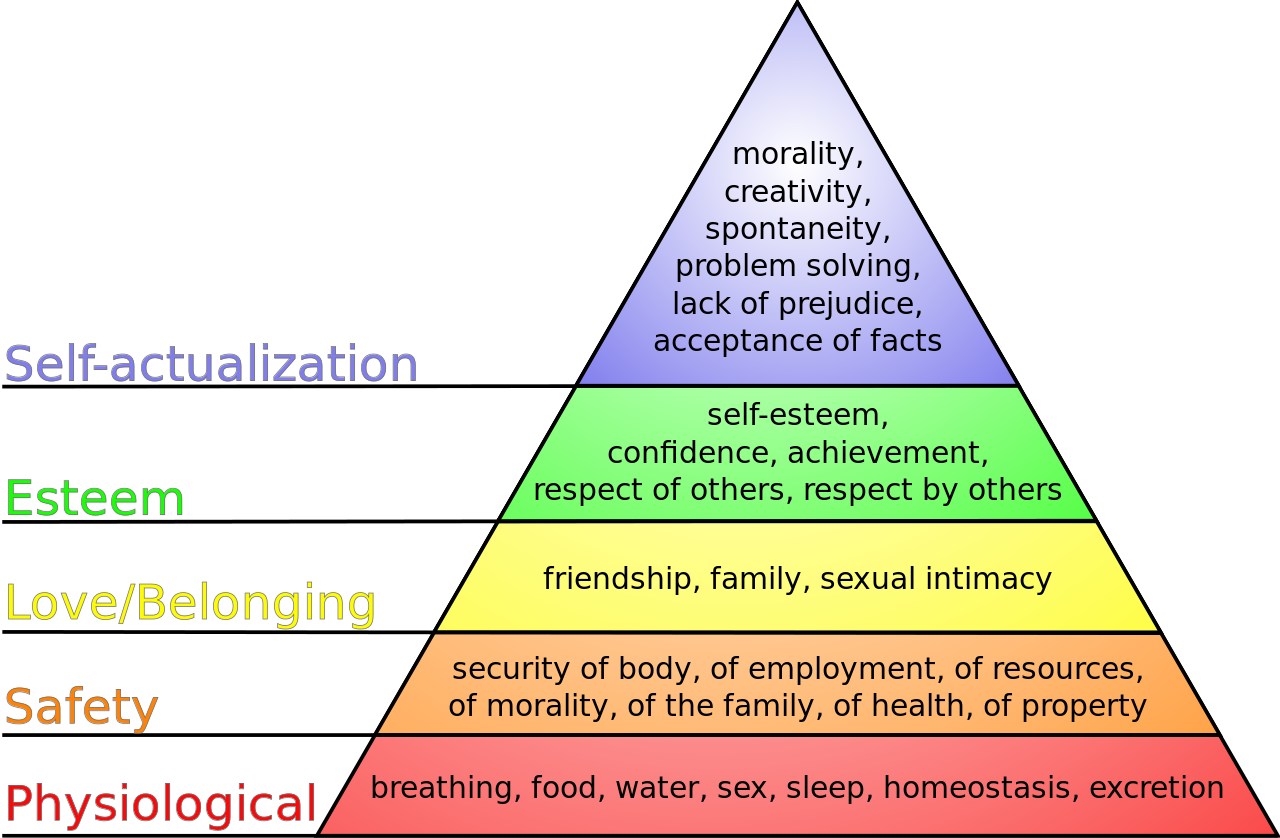
 ,
2010.
,
2010.